
If someone just left
Interim cover
Best when A CPO left, is leaving, or was let go, and the roadmap, the team and the board conversation need an owner during the search.
Priced as a multiple of a fractional retainer
One to two weeks to start
Hiring guide · 2026 market data
Hiring an interim CPO fills an empty product leadership seat at near full-time intensity, typically for 3 to 6 months while you run the permanent search. You can start within one to two weeks. If the seat never existed and the founder still owns product, the lighter fit is fractional: $4,950 a month for 25 hours, or $1,200 for a scoped day that credits in full against your first month.
30 minutes. No pitch, no deck.
Interim and fractional are not two prices for the same thing. Interim holds a seat at four to five days a week; fractional owns the decisions at one to two. Interim is the right call when a leader has actually left, and this table says so.
| 2026 | Interim CPOInterim Near full-time seat coverSeat cover | Fractional CPOFractional Part-time, contracted monthlyMonthly contract |
|---|---|---|
| What you get | A full-time seat A near full-time seat holder, four to five days a week, until the permanent hire starts.A seat holder, four to five days a week. | Owned outcomes Decisions made, your PMs led, and the work measured on activation, retention and ARR.Decisions made, PMs led, measured on ARR. |
| Cost | Not published Firms staffing interim executives generally do not publish rates. Interim runs at a substantial premium over a fractional retainer, whether billed as a day rate or a monthly fee.Firms staffing interim executives do not publish rates. | $4,950 a month My standard engagement, 25 hours a month, 3 month minimum. No equity, no payroll tax, no benefits.25 hours a month. No equity or benefits. |
| Time to start | 1 to 2 weeks With an independent. The calendar cost is scoping, not availability. Firms typically need longer to match someone from a bench.With an independent. Firms need longer. | 2 to 3 weeks Same scoping work, smaller surface. Both routes beat a permanent search by months.Same scoping work, smaller surface. |
| Commitment | 3 to 6 months Four to five days a week, ending when the permanent hire starts. This is the one thing fractional cannot do: hold a 40-hour seat.Four to five days a week, until the permanent hire starts. | 3 months, then monthly3 months 25 hours a month, 3 month minimum. That buys roadmap ownership, the product cadence and your PMs coached. It is not enough to occupy the chair, which is what interim is for.25 hours a month, 3 month minimum. |
| Cost of getting it wrong | The full premium Interim intensity is wasted on a company that needs 10 to 15 senior hours a week. That premium is the price of misdiagnosing the question.Wasted if you need 10 to 15 hours a week. | One scoped dayOne day $1,200 for the scoped day, which is all you have at risk before the retainer starts. You keep the written answer either way.$1,200, and you keep the written answer. |
2026 figures. Interim rates read as not published because the firms that staff interim executives do not publish them. My own prices are the ones I charge: $4,950 a month for the seat, $1,200 for a scoped day. Recruiter fees of 20 to 30 percent of first-year base are excluded throughout.
Most people searching for an interim CPO actually need a fractional one. The test is history: interim replaces a person, fractional replaces a gap. If a leader really did just leave, route one is the honest answer and this page will say so.
If someone just left
Best when A CPO left, is leaving, or was let go, and the roadmap, the team and the board conversation need an owner during the search.
Priced as a multiple of a fractional retainer
One to two weeks to start
If the seat never existed
Best when The seat never existed, product has always lived with the founder, and it has become the bottleneck. You can start smaller than a retainer: a scoped day at $1,200 puts one roadmap question on the table, and the fee credits in full against your first month if you continue. The fractional CPO hiring guide covers that case.
$4,950 a month, or $1,200 for a day
2 to 3 weeks to start
If the role is permanent
Best when You are past $15M ARR, product spans several squads, and the role will exist in three years.
$260,000 to $400,000 a year, plus equity
A 4 to 8 month search
Interim is the right instrument for a narrow situation. These five questions tell you whether you are in it.
You are not ready to hire if the permanent search has not started. Interim without a search becomes an expensive habit, and the common failure is an interim arrangement that turns permanent because nobody ever ran the process.
Interim rates are the least transparent corner of this market. The firms that staff interim executives keep them behind a call, so the rows that read Not published are telling you something real about how each route sells.
Updated 2026
| Route | Monthly fee | All-in cost | Notes |
|---|---|---|---|
| Interim CPO, near full-time | Not published | Not published | Four to five days a week, typically 3 to 6 months, ending when the permanent hire starts. Priced as a multiple of a fractional retainer. Firms staffing interim executives generally do not publish rates. |
| Full-time CPO | Not published | $260,000 to $400,000 | Base and cash in the US market, 2026. Equity on top. A real replacement takes a 4 to 8 month search. |
| Fractional CPO, my engagement | $4,950 | $4,950 a month | 25 hours a month, 3 month minimum, and the way in is a scoped day at $1,200 that credits in full against the first month. The full scope is on the interim CPO service page. |
| All fractional roles, published floors | $2,000 to $10,000 | Not published | Interquartile range of published monthly retainer floors across every fractional role, median $5,000. Fractional Rates Index, 2026. |
Fractional figures from the Fractional Rates Index, v1.2, covering published prices captured 17 to 21 August 2026 across 1,127 providers and 122 priced tiers from 61 providers. Full-time salary bands are US market, 2026. Recruiter fees of 20 to 30 percent of first-year base are excluded throughout.
Every figure below comes from work I shipped and measured myself, and each one links to the case study behind it. The interim proof sits apart from them: at Metapraxis, a London financial-analytics SaaS, I held the product seat as interim Product Director for 724 hours across nine months, and planning and spec cycle time fell 60 percent. That is the same seat this page is about.
102% to 112%
Net revenue retention
$30M ARR Martech SaaS. The backlog stopped being a queue of requests and started being a roadmap: strategy-aligned work rose from 35% to 90% and R&D waste fell 30%. Read the case study.
8% to 30%
Mobile trial to paid
TravelTech SaaS. Mobile-first research and A/B testing: sign-up time dropped 68% and bounce fell from 58% to 22%. This comes from my fractional CPO engagement at "TouchStay". Read the case study.
3.5d to 1.2d
Time to activation
"TouchStay" again, the same engagement. Onboarding completion rose from 52% to 81% with AI-assisted setup, and time to activation fell from 3.5 days to 1.2. Read the case study.
Sivan is an excellent product manager, product leader and team member. He cares passionately about delighting customers and is highly capable at all levels from strategic direction to writing detailed documents. I would recommend him 10/10 to any company - you will be lucky to have him.
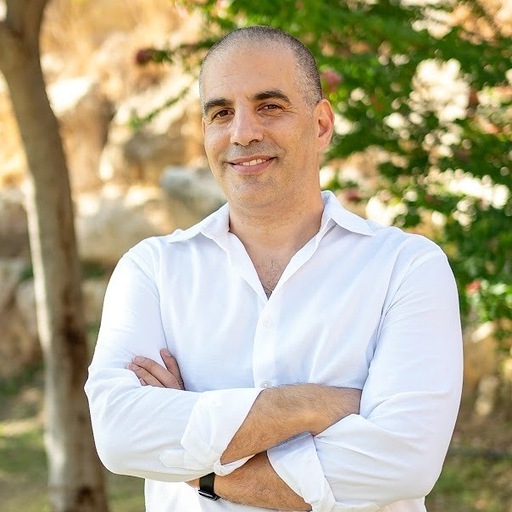
Sivan Kadosh
Fractional CPO for B2B SaaS founders. 18+ years leading product as CPO and VP Product. Eighteen named references, with dates and profile links.
If the checklist above says fractional rather than interim, you do not have to prove it with a quarter. A scoped day is $1,200, it answers one named question on your roadmap, and the fee credits in full against your first month if you take the seat at $4,950.
Three steps: a 30 minute call, a one-page scope, and a start inside two to three weeks. An interim engagement compresses my 90-day plan into the first 30 days: diagnose, interview customers, stabilize the roadmap.
Step 1
30 minutes. Bring what has happened to the roadmap since the seat emptied, and the one metric product is accountable for this quarter. You leave knowing whether the answer is interim cover, fractional, or holding the line until the permanent hire lands.
Step 2
What I own, what I coach, what I hand back, in writing. For interim work that includes the exit: the engagement ends with a permanent CPO onboarded, or a deliberate decision that the seat is not needed yet.
Step 3
Day 30 ends with a stabilized roadmap, the bets named, and every item carrying the business number it serves. The full engagement is described on the interim CPO service page.
The questions founders ask me when a product leader has just left, cost first. Every figure in the answers carries the same source as the tables above.
Firms staffing interim executives generally do not publish rates. Interim is near full-time, four to five days a week, and is priced as a substantial premium over a fractional retainer. My fractional engagement is $4,950 a month for 25 hours, which is the lighter alternative when the real need is 10 to 15 senior hours a week. If that is still more than you want to commit to yet, a scoped day is $1,200, and the fee credits in full against your first month.
The test is history. A CPO left, is leaving, or was let go, and you need interim. Product has always lived with the founder and has become the bottleneck, and you need fractional. Interim replaces a person; fractional replaces a gap.
One to two weeks with an independent. The calendar cost is scoping, not availability. A permanent replacement takes a 4 to 8 month search, and firms typically need longer to match someone from a bench.
Four scenarios, in order of how often I see them. Your CPO resigned and the roadmap, team and board conversation need an owner. A fundraise is approaching and the deck needs a product story someone can defend in diligence. An executive search has failed and the team is drifting while it resets. Or a planned transition, where the founder is stepping out of product deliberately.
Insist on it in writing before day one. An interim engagement ends with either a permanent CPO hired and onboarded by the interim, or a deliberate decision that the company does not need the full-time seat yet, in which case it steps down to fractional rather than up to forever.
A product audit, a rebuilt roadmap with explicit bets, and an operating cadence your team runs without me in the room. Day 30 ends with a plan you believe.
Yes. Scorecard, sourcing profile and final interviews. Several engagements end exactly that way, and it is a good ending.
Yes. A scoped day is $1,200. We agree the one question it answers, and the metric that judges the answer, before it is booked, and you leave with a written answer you own. If you move to the monthly engagement afterwards, the day's fee credits in full against your first month. It does not replace interim cover: one day cannot hold a seat that a leader just vacated.
Bring what has happened to the roadmap since the seat emptied and the metric product answers for this quarter. Thirty minutes tells you whether you need interim cover, a fractional CPO, or to keep running the search. If the answer is not me, I will tell you that on the call.
Book a Product Strategy Session