SaaS Product Consulting
SaaS product consulting is senior product work on one problem that already has a name, with an end date agreed before anything starts. It is the answer when you can name what is wrong, retention or positioning or a roadmap nobody believes, and you want it settled rather than staffed. Measured on a change in a number chosen up front.
This engagement fits a funded B2B SaaS company between $2M and $15M ARR with a specific product problem it can name. If three of the four lines below describe your quarter, the fit is strong.
Stage
Series A or B, with a product team that needs judgment rather than headcount.
Revenue
$2M to $15M ARR, where the problem is costing measurable revenue this quarter.
Symptom
You can state the problem in a sentence: retention, positioning, a build versus buy call, or a roadmap nobody believes.
Decision
You are weighing an ongoing seat against settling one question and getting back to work.
Not for you if you are pre product-market fit, you need delivery capacity rather than product judgment, or you cannot state the problem in one sentence. Without a defined question a day turns into a survey and you pay for a quarter of discovery, which is why the sentence comes before the invoice.
This is what a bounded intervention looks like when it works. The problem had a name before anything started: users were signing up and not finishing onboarding.
"TouchStay", TravelTech SaaS. This comes from my fractional CPO engagement there. The completion rate was counted before the work and after it, against the same definition. That is the shape of every scoped day here: one named problem, one number agreed before the day and counted after it.
Read the case study →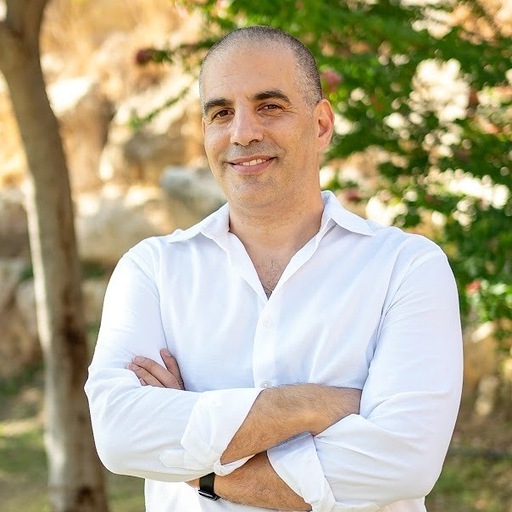
Sivan Kadosh · Fractional CPO. 18+ years leading product, in CPO and CEO roles, across B2B SaaS, TravelTech, real-estate tech and fintech. You work with me, not a bench.
Read all 18 recommendations →SaaS product consulting is focused senior work on a question you have already framed, as distinct from an ongoing leadership seat. Same depth, same person, same judgment. What separates them is that consulting has an end date and a named measure set before it starts, and a seat has neither. Background reading: how to create a SaaS product and how to build a product vision.
Swipe to compare →
| Consulting | Fractional CPO | |
|---|---|---|
| The precondition | You know what the question is | You do not, and nobody at the company does |
| Shape | A bounded intervention on a named problem | Ongoing embedded leadership |
| Typical cost | One published day rate, on the pricing page | One published monthly price, 25 hours, on the pricing page |
| Commitment | The scope is the commitment | 3 month minimum, then monthly |
| When it ends | On the date agreed before it started | When there is a permanent CPO, or when I am not needed |
Consulting works when you already know which question you need answered. If you do not, the engagement turns into a survey and you pay for a quarter of discovery. I would rather spend the first call narrowing the question than the first month searching for it. And if that call shows you have five questions rather than one, you heard it on the call and not on the invoice.
If you need the seat held rather than a targeted intervention, read what a fractional CPO is or go straight to part-time product leadership.
A day is one working day of my time on the problem you named, and on whether it really is the problem. That is what separates this page from the others here. Most of what companies frame as the problem is the visible symptom, and this day tests that first.
How a scoped day runs:
If the decision turns out to have nobody to hold it, that is the embedded option at 25 hours a month, priced on the pricing page. Note the order though. A bounded engagement becoming a retainer because there was nobody to execute is a normal outcome. A bounded engagement becoming a retainer because the scope inflated is a failure on my side.
Adjacent engagements: fractional CPO, product management consulting and product strategy consulting.
The price is published on the pricing page: a scoped day, no minimum, or the seat at 25 hours a month. What each contains and how the numbers compare with the market is there too.
01
Thirty minutes narrowing the question. You leave knowing whether you named the constraint or the symptom, whether or not we work together.
02
In writing: what we settle, what the measure is, and when it finishes. The end date is set before payment, not after.
03
I write the decision up and walk your team through the reasoning myself, so whoever has to defend it next month heard it from me first. The measure and the owner are named on the same page.
Measured outcomes, not benchmarks pulled from a survey. Scope and starting point set the range.
Sivan is an excellent product manager, product leader and team member. He cares passionately about delighting customers... I would recommend him 10/10 to any company - you will be lucky to have him.
As part of his role as VP Product, he identified creative ideas, developed sharp strategies and built the road map while focusing on customer experience and business needs.
Nothing was added without a clear scope of development... and a clear way to measure the success or failure of this feature.
Leading by example, empowering, mentoring, and growing his product teams, he created great product culture and set us Product Managers up for success.
If activation or retention is the number that worries you, bring it. We will look at it together.
18+ years leading product, in CPO and CEO roles, across B2B SaaS, TravelTech, real-estate tech and fintech. Two of my recent clients hired me in this exact seat. At TouchStay, a TravelTech SaaS, I held the fractional CPO seat from 2024 to May 2026: trial-to-paid went from 35% to 49%, and mobile trial-to-paid from 8% to 30%. At Metapraxis, a financial analytics SaaS, I held it from October 2022 to July 2023: planning and spec cycle time fell 60%, and the CTO's review is below.
About Sivan →