
A subscription pricing model charges customers a recurring fee for continued access to software, usually monthly or annually with a discount for the annual commitment. It replaces a large upfront license with predictable revenue for the vendor and a lower adoption barrier for the buyer, and it ties price to ongoing delivery.
I have hired product people, and I have been one. If the title is unclear, the problem is usually the decision no one owns.
See what a monetization PM owns →Why is SaaS pricing more complex than it looks?
Pricing looks like a number on a page and is actually a system. Behind the published tiers sit entitlement rules, proration, upgrade and downgrade paths, invoicing, tax, and the data model that decides what a customer is allowed to do. Changing the number is easy; changing the system is not.
Not long ago, together with one of the SaaS startups I work with, we launched a Pricing Plans Management System (PPMS). This system allows you to manage existing tiers, add or remove features, change prices, and more. Now, a startup founder might rightfully ask: “Why invest in such a system when you can just change things on the frontend?!” My answer to them would be simple, and it is a big part of the reason I am writing this article: creating the right pricing for your products is a process that takes a lot of time and requires a ton of trial and error.
One version is never enough. Pricing changes always raise countless questions regarding new users, legacy users, and upgrade processes. Having a system that knows how to support all these changes makes the entire process much simpler.
Because the truth is, pricing is not a “set it and forget it” task. In fact, to illustrate just how critical pricing optimization is, here are two key metrics from in-depth SaaS industry research:
- A 12.7% impact on the bottom line: Research by Paddle (formerly ProfitWell) found that a mere 1% improvement in monetization and pricing leads to an average 12.7% increase in the bottom line, a figure that makes pricing 4x more efficient for driving growth than acquiring new customers (Acquisition).
- Annual updates as a growth standard: According to OpenView’s pricing reports, SaaS companies that review and update their pricing at least once a year double their chances of maintaining a stable Net Revenue Retention (NRR) of over 100%, compared to companies that remain stagnant.
In my role as a Fractional CPO, I see too many SaaS companies leaving money on the table simply because their technological infrastructure turns every pricing experiment into a logistical nightmare. Because every change requires developer intervention, these companies shy away from necessary changes and ultimately hurt their growth potential.
But once you break through this technological barrier, a whole new world of strategic pricing opens up. You stop guessing and start testing, measuring, and genuinely optimizing. The ability to play with models in real-time, understand which tier converts best, and accurately align the billing model with the value the customer receives, transforms from a technical constraint into a massive competitive advantage.
This is exactly why this article will not just cover the technical “how-to” of changing prices, but rather the “what” and the “why” of changing them. We will dive deep into the anatomy of Subscription Pricing, understand why it became the gold standard of the SaaS industry, and most importantly, how you can use different pricing strategies not just to generate Monthly Recurring Revenue (MRR), but to maximize Customer Lifetime Value (LTV), turning your pricing from a one-time decision into your company’s fastest and most efficient growth engine.
Why did subscription pricing become the SaaS default?
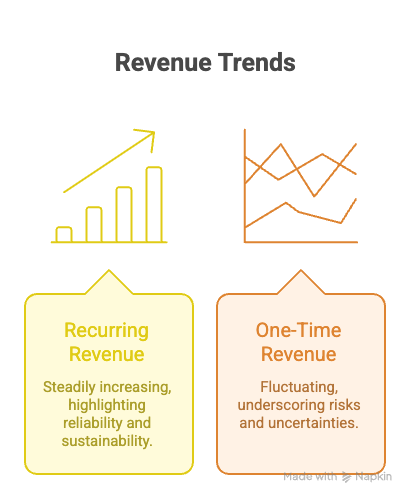
Software used to sell as a perpetual license: one large payment, indefinite use. That created friction for buyers and lumpy, unpredictable revenue for vendors. Subscription replaced the large upfront commitment with smaller recurring amounts, which lowered the adoption barrier and gave vendors revenue they could forecast and finance against.
Twenty years ago, most software companies sold licenses. Customers paid once and used the product indefinitely. That model created friction for buyers and unstable revenue for vendors.
Subscription pricing changed this dynamic. Instead of a large upfront commitment, customers pay smaller recurring amounts. This lowers adoption barriers and creates a more predictable revenue stream for SaaS companies.
Recurring revenue also aligns incentives. SaaS companies must continuously improve their product to retain customers. This encourages stronger product development cycles and better customer success practices.
From a product leadership perspective, subscription pricing also improves prioritization. When revenue depends on retention, teams are forced to focus on delivering continuous value rather than shipping features that look good in demos but do not drive long term usage.
What does subscription pricing mean in practice?
In practice subscription pricing means customers pay on a recurring cycle to keep access, usually monthly or annually with a discount for committing to the year. Unlike a one-time purchase, the price is tied to continuing delivery: customers expect updates, support and reliability for as long as they keep paying.
“Subscription pricing means customers pay regularly to maintain access to software. Most SaaS companies offer monthly or annual billing cycles, often with discounts for annual commitments.”
Sivan Kadosh, Fractional CPO
Subscription pricing means customers pay regularly to maintain access to software. Most SaaS companies offer monthly or annual billing cycles, often with discounts for annual commitments.
Unlike one time pricing, subscription pricing is closely linked to ongoing product delivery. Customers expect updates, improvements, support, and reliability.
A simple comparison helps illustrate the difference:
| Model | Revenue pattern | Customer relationship |
|---|---|---|
| One time purchase | Single payment | Transactional |
| Subscription pricing | Recurring payments | Continuous relationship |
| Usage based pricing | Variable recurring payments | Value aligned |
Subscription pricing changes how companies think about revenue. Instead of optimizing for single transactions, SaaS companies optimize for retention, expansion, and lifetime value.
Why does subscription pricing suit SaaS products?
Software is not static. Features evolve, integrations expand, performance improves, and a subscription is the only model that prices that continuous change honestly. It also aligns both sides: the vendor is paid for sustained value rather than a single transaction, and the customer can leave if the value stops arriving.
“Unlike one time pricing, subscription pricing is closely linked to ongoing product delivery. Customers expect updates, improvements, support, and reliability.”
Sivan Kadosh, Fractional CPO
Software is not static. Features evolve, integrations expand, and performance improves. Subscription pricing supports this continuous evolution.
Benefits include:
- Predictable revenue
- Higher customer lifetime value
- Better forecasting accuracy
- Continuous product improvements
- Stronger relationship between product and customer success
One thing I often notice when working with SaaS founders is that pricing decisions are treated as tactical rather than strategic. Pricing influences positioning, target customers, onboarding friction, and even roadmap prioritization.
Companies that treat pricing as a strategic discipline often outperform competitors with similar products.
Which subscription pricing models do SaaS companies use?
Four structures cover most of the market. Flat rate offers one product at one price, simple to communicate and unable to capture different willingness to pay. Tiered packages segment by feature set. Per-seat scales with team size. Usage-based scales with consumption. Most companies end up combining two of them. The full comparison across every model sits in this guide to SaaS pricing models.
Flat rate pricing
Flat rate pricing offers one product at one price.
It is simple and easy to communicate, but it limits the ability to capture different willingness to pay across segments.
This model works best when:
- The product solves a single clear problem
- Customers have similar needs
- The market is well defined
In practice, flat pricing often becomes restrictive as the company scales.
Tiered pricing
Tiered pricing offers multiple plans designed for different customer segments.
Each tier typically includes different feature sets or usage limits.
Tiered pricing allows companies to serve startups, scaleups, and enterprise customers simultaneously.
| Tier | Typical customer | Pricing logic |
|---|---|---|
| Starter | small teams | lower limits, core features |
| Growth | scaling companies | expanded functionality |
| Enterprise | large organizations | customization and support |
One recurring mistake I see is feature segmentation that does not reflect real customer needs. When tiers are created without clear customer segmentation, upgrade paths become unclear and conversion suffers.
Per seat pricing
Per seat pricing scales revenue based on the number of users accessing the product.
Collaboration tools frequently use this model because value increases as more team members join.
Advantages:
- Predictable expansion revenue
- Easy to understand pricing logic
- Aligned with team growth
Challenges:
- Customers may restrict user seats to control costs
- Pricing may discourage broad adoption across departments
Per seat pricing works best when the product creates incremental value for each additional user.
Usage based pricing
Usage based pricing aligns cost with product consumption.
Examples of usage metrics:
- API calls
- Data processed
- Messages sent
- Storage volume
Usage based pricing reduces entry friction because customers only pay for what they use.
However, revenue predictability may decrease if usage fluctuates significantly.
| Usage metric | Typical SaaS category |
|---|---|
| API requests | developer tools |
| data storage | infrastructure platforms |
| emails sent | marketing automation |
| transactions | fintech products |
Many infrastructure companies successfully combine subscription and usage based pricing.
Hybrid pricing models
Hybrid pricing combines fixed subscription fees with usage based components.
Example: monthly platform fee plus variable usage costs.
Hybrid models balance revenue predictability with value alignment.
From experience, hybrid pricing often works well once product value is clearly understood and customers have predictable usage patterns.
How do you choose the right pricing structure?
Choosing a structure starts with how customers actually receive value, not with what competitors charge. The questions worth answering are what outcome the product delivers, what unit that outcome scales with, and whether the customer can predict their own bill. A metric customers cannot forecast creates churn regardless of price.
Choosing a pricing model should start with understanding how customers receive value.
Questions worth answering:
- What outcome does the product deliver?
- What drives willingness to pay?
- How does value scale as customers grow?
- Does usage correlate with customer success?
When working with SaaS companies, I often map pricing decisions to the primary value metric.
Examples of value metrics:
- Number of users
- Projects created
- Transactions processed
- Revenue generated
- Data volume
If pricing does not align with the value metric, friction increases and conversion rates decline.
What are the pricing strategy best practices?
Customers pay more willingly when price tracks a measurable outcome. That means picking a value metric the customer already counts, keeping the tier structure simple enough to explain in a sentence, reviewing pricing on a schedule rather than in a crisis, and grandfathering existing customers deliberately rather than by accident.
Align pricing with customer value
Customers are more willing to pay when pricing reflects measurable outcomes.
For example:
- CRM software often charges per user
- Email platforms often charge per subscriber
- Analytics tools often charge based on tracked events
Misaligned pricing creates friction and reduces expansion revenue potential.
Reduce friction for early stage customers
Lower barriers to entry increase adoption.
Common strategies include:
- Free trial periods
- Entry level pricing tiers
- Freemium models
Reducing initial commitment increases product adoption and accelerates learning cycles.
One pattern I frequently observe is founders overestimating willingness to pay before product market fit is fully achieved.
Structure pricing tiers intentionally
Pricing tiers should reflect meaningful differences in value.
Poor tier design often results in:
- Unclear upgrade incentives
- Feature confusion
- Pricing objections
Well structured tiers simplify decision making.
| Tier characteristic | Purpose |
|---|---|
| clear feature progression | encourages upgrades |
| logical pricing gaps | reinforces perceived value |
| targeted personas | improves conversion rates |
Test pricing continuously
Pricing is not a one time decision. High performing SaaS companies regularly test:
- Price levels
- Feature packaging
- Annual discounts
- Trial structure
Small pricing improvements often generate significant revenue impact.
In several projects I worked on, adjusting packaging alone increased ARPU without affecting acquisition cost.
Optimize annual plans strategically
Annual plans improve cash flow and reduce churn risk.
Typical annual discounts range between 10 percent and 25 percent.
Annual plans also signal stronger product commitment.
| Billing period | Impact on SaaS metrics |
|---|---|
| monthly | higher flexibility |
| annual | improved retention |
| multi year | stronger revenue predictability |
What are the common subscription pricing mistakes?
Most pricing damage is self-inflicted and structural. Pricing against competitors instead of value, creating more tiers than anyone can compare, choosing a value metric the customer cannot predict, and leaving the structure untouched for years while the product changes underneath it. Each one caps growth quietly.
Many SaaS companies unintentionally limit growth through pricing structure.
Frequent mistakes include:
- Pricing based only on competitors
- Too many pricing tiers
- Weak differentiation between plans
- Ignoring expansion revenue potential
- Overcomplicated pricing pages
- Underpricing the product
One consistent pattern I see is that companies focus heavily on acquisition but rarely revisit pricing structure.
Pricing often has greater impact on growth than incremental traffic improvements.
What does subscription pricing look like by category?
Different categories price on different units because value arrives differently. Collaboration tools charge per seat because value scales with people. Infrastructure charges on consumption because value scales with usage. Analytics often charges on data volume. The table below pairs each category with its typical model and value metric.
Different SaaS categories adopt different pricing structures depending on how value is delivered.
| SaaS category | Pricing model | Value metric |
|---|---|---|
| collaboration tools | per seat | number of users |
| analytics platforms | usage based | events tracked |
| CRM software | tiered | feature access |
| infrastructure tools | hybrid | usage volume |
| marketing platforms | tiered or usage | contacts or emails |
Understanding category patterns helps founders evaluate alternatives more effectively.
How does subscription pricing influence SaaS metrics?
Pricing decisions land directly on the metrics the business is measured by. Monthly recurring revenue moves with the structure, average revenue per account moves with packaging, net revenue retention moves with how expansion is priced, and churn moves with whether customers can predict what they will owe.
Pricing decisions influence core SaaS metrics including revenue growth, retention, and expansion potential.
Key metrics affected:
- Monthly recurring revenue
- Annual recurring revenue
- Customer lifetime value
- Customer acquisition cost payback
- Churn rate
- Net revenue retention
Pricing structure directly affects expansion revenue potential and long term profitability.
How does a fractional CPO approach pricing optimization?
Pricing sits between product, marketing, finance and sales, which usually means nobody owns it. Without an owner it evolves slowly and inconsistently. A fractional CPO takes the decision rights, runs the value-metric work, and puts a review cadence in place so pricing changes on evidence rather than on pressure.
Pricing decisions often sit between product, marketing, finance, and sales teams. Without clear ownership, pricing evolves slowly or inconsistently.
A fractional CPO for SaaS typically supports pricing strategy definition, value metric identification, packaging optimization, pricing experiments and alignment between product roadmap and monetization
In many SaaS companies, pricing evolves organically without structured validation. A more systematic approach often reveals opportunities to improve revenue efficiency significantly.
One insight from experience is that pricing improvements often increase revenue faster than feature development.
Improve your subscription pricing strategy with a fractional CPO
Many SaaS companies reach a stage where their initial pricing model no longer reflects the value they deliver.
Adjusting pricing structure can improve conversion rates, increase expansion revenue, and strengthen positioning.
A fractional Chief Product Officer helps evaluate pricing strategy objectively and implement structured experiments aligned with long term product strategy.
Pricing no longer matching the value you deliver?
Get a senior, ex-CPO read on your biggest product bottleneck in 30 focused minutes. No pitch, no obligation.
Book a Product Strategy SessionKey takeaways
Key takeaways
- Subscription pricing is a strategic component of SaaS growth.
- The most effective pricing models align with customer value metrics and evolve as the product matures.
- Companies that continuously refine pricing structure often improve retention, expansion revenue, and overall profitability without increasing acquisition costs.
I have hired product people, and I have been one. Whichever title you pick, someone has to carry the decision.
See what a monetization PM owns →FAQs
What is subscription pricing
Subscription pricing is a model where customers pay recurring fees at regular intervals to access software or services. It is widely used in SaaS because it creates predictable revenue and supports continuous product improvements.
What is a subscription pricing model in SaaS?
A subscription pricing model defines how customers are charged for ongoing access to software. Common models include tiered pricing, per seat pricing, usage based pricing, and hybrid pricing structures.
What are common subscription pricing strategies?
Common strategies include tiered pricing, per user pricing, usage based pricing, and hybrid pricing models combining fixed recurring fees with variable usage components.
How do you choose the right subscription pricing model?
The best pricing model depends on how customers receive value from the product, how usage scales, and how the company plans to grow. Pricing should align with the main value metric.
What is the difference between subscription pricing and usage based pricing?
Subscription pricing typically involves fixed recurring payments, while usage based pricing varies depending on consumption. Many SaaS companies combine both approaches.
What clients say
Read all 18 references“As a product manager, I can say that Sivan is very professional – always looking deeply on the discussed feature to understand end to end its effect on the whole product, and as well the eager to understand what would be the added value to the strategy of the company. Nothing was added without a clear scope of development, a clear understanding of the business owner and a clear way to measure the success or failure of this feature.”
“Leading by example, empowering, mentoring, and growing his product teams, he created great product culture and set us Product Managers up for success. His vision and strategic direction enabled us to create successful products that brought millions of dollars of revenue to the company and its clients.”
“As part of his role as VP Product, he identified creative ideas, developed sharp strategies and built the road map while focusing on customer experience and business needs.”