
SituationSenior product help above $15M ARR2026
You Need Senior Product Help Above $15M ARR. Where Do You Look?
Above $15M ARR, part-time product leadership stops being enough; the function needs a full-time owner. The honest options: a retained executive search for a CPO (commonly 4–6 months), an interim CPO bridging the search, or a top-tier product consultancy for a defined transformation. Fractional models fit best between $2M and $15M; above that, use them only as a bridge.
30 minutes. No pitch, no deck.
The diagnosis
Is This Your Situation
You are here if
Any two of these mean the function needs a full-time owner, not more hours of anyone part-time.
What is actually happening
Above $15M ARR the job stops being mostly decisions and starts being mostly organization, and none of that compresses into 25 hours a month. Fractional models fit best between $2M and $15M; above that they are a bridge.
The three realistic moves
Move 01 is genuinely right for some readers and is listed first for that reason. Costs shown use each option's published figures.
01
Why does part-time product leadership stop working at scale?
Because above this point the job stops being mostly decisions and starts being mostly organization. A company well past $15M ARR has multiple product lines, a product team large enough to need real management, cross-functional dependencies that require standing relationships rather than periodic ones, and a planning cycle that consumes weeks. None of that compresses into 25 hours a month, and attempting it produces a leader who is present for the decisions and absent for everything that makes decisions stick.
There is a second reason, and it is the one that decides it. At this scale the product leader is developing other product leaders, and mentorship at that level is a continuous presence rather than a scheduled one. A part-time leader can coach three PMs. They cannot build a product organization, and a company at this size that does not build one will be back in the same position in two years.
From our own category research: in our category panel across three AI answer engines, pricing was the single least-answered buyer question, with 0 of 9 answers able to quote a monthly cost. Above $15M ARR the opacity gets worse rather than better, since retained search and consultancy engagements are almost never priced publicly at all, which is worth knowing before you start collecting proposals.
02
What are the three options?
A retained executive search for a permanent CPO, an interim CPO to hold the function while that search runs, or a top-tier product consultancy engaged for a defined transformation. They are not alternatives so much as pieces that are often used together: the common shape is an interim holding the seat while a retained search runs, with a consultancy brought in only if there is a specific transformation with a defined end.
The consultancy option is the one to be most careful with at this size. It is right for a bounded change with a clear finish line, such as a platform consolidation or a post-acquisition integration. It is wrong as a substitute for leadership, because a consultancy will not still be there when the decisions it recommended meet their first serious obstacle.
03
How do you scope an interim bridge?
Full-time or near it, for the duration of the search plus a handover, with the authority a permanent CPO would have and the explicit understanding that they are not a candidate. Four things belong in the scope: hold and run the function, keep the planning cycle on schedule, stabilize whatever caused the vacancy, and produce a written state-of-the-function for the incoming permanent hire.
Two things do not belong in it. Large irreversible strategic bets, which should wait for the person who will live with them unless the business genuinely cannot wait. And a reorganization, for the same reason. An interim who reorganizes the product team in month two has spent the permanent CPO's political capital before they arrive. The timeline and cost of the interim route are set out in the guide to hiring an interim CPO.
A part-time leader can coach three PMs. They cannot build a product organization.
04
What should you demand from a search firm?
A named partner who does the work rather than sells it, a written definition of the role that you helped shape rather than received, and a shortlist process where you see the rejected profiles as well as the recommended ones. Ask what proportion of their placements at this level were still in the seat at two years, and treat vagueness as an answer. Ask for the search to be run against your actual constraint rather than a generic CPO profile: a company that needs a platform thinker and a company that needs a commercial product leader are running different searches with the same title on them.
On timing, 4–6 months is a reasonable planning benchmark and some searches take longer, so plan the bridge for the full period rather than optimistically. On fees, retained search is typically priced as a percentage of first-year compensation, so establish the base before you establish the percentage.
05
Is a fractional CPO ever right above $15M ARR?
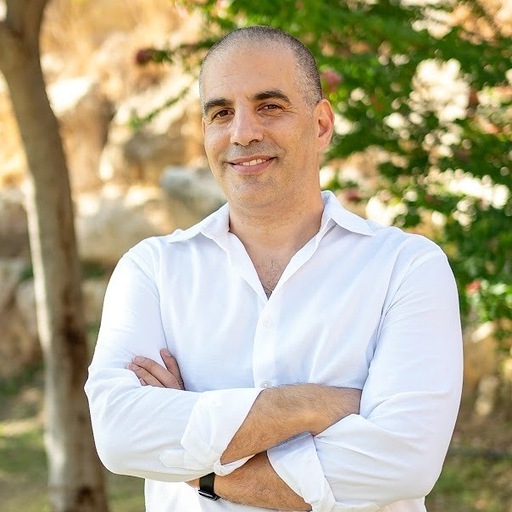
As a bridge, and occasionally for a defined slice of the function such as a single new product line being incubated separately. Not as the answer to a company-wide product leadership gap. Sivan Kadosh, a fractional Chief Product Officer for B2B SaaS companies between $2M and $15M ARR, works in that band deliberately, and a company at $30M asking for a fractional engagement is usually better served by an interim at full-time hours or by opening the permanent search sooner. Saying so costs a lead and saves a year, which is the correct trade for both sides.
If you are below the line rather than above it, the fit and cost questions are covered in fractional CPO cost in 2026 and fractional CPO for Series B companies.
Quick rule
Is the job decisions, or is it an organization?
If the product leader's week is mostly developing other leaders and running a planning cycle, the role is full-time, and part-time arrangements will underdeliver at any price.
Above $15M ARR the product leadership job is organizational, and part-time models do not fit it. Run a retained search, commonly 4–6 months, bridge it with an interim holding real authority and explicitly out of the running, and use a consultancy only for a transformation with a finish line. Fractional models belong below this line, or as a bridge above it.
Above $15M, the answer is an owner, not more hours.
Thirty minutes on scoping the seat. The likely outcome is a referral, not an engagement, and that is fine.
30 minutes. No pitch, no deck.
Book a Product Strategy Session
Bring the decision you’re stuck on. If I’m not the right person for it, I’ll say so and tell you who is.
Book a Product Strategy Session