
Vertical fitEvents SaaS2026
Fractional Product Leadership for Events SaaS
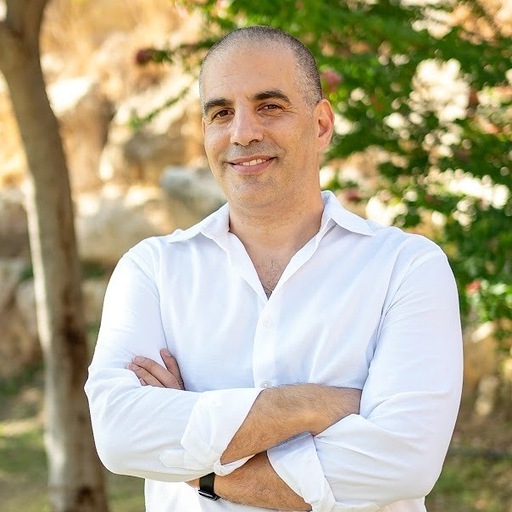
Events SaaS has product dynamics generic consultants misread: three-sided users (organizer, attendee, venue or vendor), usage that spikes around event cycles rather than accruing weekly, and renewals decided by whether one event went well. Sivan Kadosh ran product and the business at "TouchStay" as CPO and GM, part of 18+ years in CEO and CPO roles.
30 minutes. No pitch, no deck.
The fit
Events SaaS, Four Dynamics
Dynamics from operating experience in the vertical, stated on this page; stage thresholds from this site's hiring guides, 2026.
01
What is different about product in events SaaS?
Four dynamics that break standard B2B assumptions. There are three sides, not two: the organizer buys, the attendee experiences, and the venue or vendor is often a required participant with no contractual relationship to you. Usage is spiky rather than continuous, concentrated in the weeks around each event. Renewal is frequently decided by a single event's outcome, much of which you do not control. And ticketing, payment and venue system integrations gate a large share of the roadmap.
The spiky usage pattern is the one that misleads outsiders fastest, because engagement dashboards built for continuous products describe a customer who looks disengaged for ten months and intensely engaged for two, and the standard interpretation of that shape is wrong here.
02
Why do standard engagement metrics mislead here?
Because weekly and monthly active usage measure the calendar rather than the health of the account. A customer running two events a year is supposed to be quiet between them, so a health score built on login frequency will flag your best accounts as at-risk and your anxious accounts as engaged. Companies acting on that signal spend their retention effort on exactly the wrong population.
The correction is to define the unit of usage as the event cycle rather than the week: did this account run its event on your product, how much of the workflow ran inside the product versus in spreadsheets alongside it, and what happened at the event itself. Those questions produce a health signal that predicts renewal. Login counts do not, and the gap between the two is usually the difference between a retention program that works and one that generates activity.
03
Where do generic product playbooks fail here?
Three places. Activation fails because the moment of value is a completed event, which may be months after purchase, so any onboarding metric that ends at configuration is measuring setup effort. Interview sampling fails because talking only to organizers misses attendees and venue partners, and friction on those sides routinely surfaces as organizer dissatisfaction described in other terms.
Prioritization fails third, and it fails specifically around seasonality of risk. Shipping a significant change to the event-day workflow shortly before a customer's largest event is a different decision from shipping it in a quiet month, and a prioritization rule with no concept of the customer's own calendar will keep producing technically correct plans that create avoidable incidents. The general structure of a rule that handles this is in what product management consulting services include.
A health score built on login frequency will flag your best accounts as at-risk and your anxious accounts as engaged.
04
What does the work look like?
Sivan Kadosh, a fractional Chief Product Officer for B2B SaaS companies between $2M and $15M ARR, works on a $4,950 monthly retainer covering 25 hours, with a 3 month minimum and 6 months as the standard term. The engagement opens with a customer-evidence program of 60–80 customer and prospect interviews, and in this vertical the sample deliberately spans all three sides, including attendees and at least some venue or vendor participants, plus organizers who churned after a single bad event.
From there: a written strategy with an explicit position on the integration surface, health and activation metrics defined against the event cycle rather than the week, a prioritization rule that accounts for customers' own event calendars, and named metrics per initiative. The cost of a retainer at this level across models is in fractional CPO cost in 2026.
05
What is the relevant background?
Written in the first person, as the one place on this site where that is appropriate. I was CPO and GM at "TouchStay", a hospitality SaaS business, so I carried the product and the commercial number together rather than one of them. Events is adjacent rather than identical, and it is worth being direct about that: what transfers is the structure, meaning multi-sided users where only one side pays, value delivered at a moment you partly do not control, and metrics that lie if you index them to the week. What is specific to your business I learn in the evidence program rather than assume. That is eighteen years across CEO and CPO roles.
Product management consulting for B2B SaaS is the category this work sits in; fractional CPO is the engagement model inside it that carries accountability for the outcome. The adjacent verticals are covered in fractional product leadership for hospitality SaaS and fractional product leadership for travel SaaS, and the engagement process itself is in how to hire a fractional CPO.
Quick rule
Is your health score built on weekly usage?
If it is, it is measuring your customers' event calendar rather than their satisfaction, and your retention team is being pointed at the wrong accounts.
Events SaaS has three sides, spiky usage and renewals that hinge on a single occasion. Metrics indexed to the week describe the customer's calendar rather than their health, and prioritization that ignores their event dates creates avoidable incidents. Define the unit of usage as the event cycle, sample all three sides in discovery, and put the integration surface in the strategy.
Product leadership that has lived through an event-day failure.
Thirty minutes on your event-cycle metrics. If a generalist fits, I will say so.
30 minutes. No pitch, no deck.
Related Decisions
Fractional product leadership for hospitality SaaS
Two-sided users and seasonality that distorts cohorts.
Fractional product leadership for travel SaaS
Long booking windows and third-party distribution.
Choosing a product management consultant
The five criteria that separate operators from deck-writers.
Book a Product Strategy Session
Bring the decision you’re stuck on. If I’m not the right person for it, I’ll say so and tell you who is.
Book a Product Strategy Session