
Route one
A fixed-fee strategy project
Best when You have one bounded question and you can name the decision it will force. Contract for named outputs, not for strategy support.
$150 to $400 an hour, or fixed fee
A 2 to 4 week diagnostic
Hiring guide · 2026 market data
A product strategy consultant should produce decisions your team executes: a segment choice, a rebuilt roadmap, a pricing model, typically in 4 to 8 weeks. Advisory pricing runs $150 to $400 an hour at the senior end. If the strategy needs an owner afterwards, a fractional retainer at $4,950 a month fits better.
30 minutes. No pitch, no deck.
Strategy work has the highest deck-to-drawer ratio in consulting, so the structural question is not the rate. It is what happens after the analysis. For a single bounded question, the project column is the right one and it is cheaper.
| 2026 | Strategy projectProject Hourly or fixed feeFixed fee | Fractional product leaderFractional Part-time, contracted monthlyMonthly contract |
|---|---|---|
| What you get | A deliverable Named outputs and the written analysis behind them. Implementation stays with you.Named outputs on paper. You implement. | Owned outcomes Decisions made, your PMs led, and the work measured on activation, retention and ARR.Decisions made, PMs led, measured on ARR. |
| Total annual cost | $150 to $400 / hr At the senior end, or a fixed-fee diagnostic project. Priced per engagement, not per year.Senior end, or fixed fee. | $60,000 to $180,000$60K to $180K $5,000 to $15,000 a month. My standard engagement sits inside this range at $4,950.$5,000 to $15,000 a month. |
| Time to start | 2 to 4 weeks A fixed-fee diagnostic runs 2 to 4 weeks; a full engagement typically 4 to 8.Diagnostic; a full engagement runs 4 to 8. | 2 to 3 weeks One call to scope the problem, one to test fit with your team, then a written plan.Two calls, then a written plan. |
| Commitment | One engagement It ends when the named outputs land. For one bounded question that is exactly right, and it costs less than a retainer.Ends when the named outputs land. Cheaper for one question. | 3 months of ownership 25 hours a month. Someone sits in the roadmap meetings and holds the line afterwards.25 hours a month, then monthly. |
| Cost of getting it wrong | A deck in a drawer The highest deck-to-drawer ratio in consulting. Full price, and nothing your team stops building.Full price, nothing changes. | One month of feesOne month $4,950, and you keep the strategy work already delivered.$4,950, and you keep the work delivered. |
2026 figures. No uplift has been applied to any number on this page. The rates shown are the ones published on this page; my own price is my published engagement terms. Recruiter fees of 20 to 30 percent of first-year base are excluded throughout.
Half of we need product strategy turns out to be something else on inspection. These are the three routes, and the first two are not me.
Route one
Best when You have one bounded question and you can name the decision it will force. Contract for named outputs, not for strategy support.
$150 to $400 an hour, or fixed fee
A 2 to 4 week diagnostic
Route two
Best when The strategy will need an owner afterwards, someone who sits in the roadmap meetings and holds the line when the loudest customer calls. The fractional CPO hiring guide covers the route.
$5,000 to $15,000 a month
2 to 3 weeks to start
Route three
Best when You are not yet sure the stall is a strategy problem at all. The free Growth Ceiling calculator tells you whether it is strategy or execution, which is the difference between two very different hires.
Free
About an hour
Before paying for a full engagement, spend an hour quantifying the problem. These five questions do most of that work.
You are not ready to hire if the proposal has no kill criteria and no checkpoint where you can stop. Strategy is not the document. It is what your team stops building on Monday.
What each route costs, and what each one leaves behind. The structural decision is what happens after the analysis, not the hourly rate.
Updated 2026
| Route | Rate | Annual equivalent | Notes |
|---|---|---|---|
| Hourly advisory | $150 to $400 / hr | Project priced | At the senior end. Pure analysis, priced by the hour. |
| Fixed-fee diagnostic | Project priced | Project priced | Typically 2 to 4 weeks, with a written output. A full engagement runs 4 to 8 weeks and should end with named outputs: a segment decision with its evidence, a rebuilt roadmap, a pricing and packaging model, and the operating cadence that keeps the strategy alive. |
| Fractional product leader | $5,000 to $15,000 / mo | $60,000 to $180,000 | For when the strategy needs an owner. My standard engagement is $4,950 a month for 25 hours, 3 month minimum. See the fractional CPO guide. |
| Full-time head of product | Not published | $250,000 or more | All-in, plus equity. Comparison anchor published by Sifted, 11 August 2023. See the head of product guide. |
| All fractional roles, published floors | $2,000 to $10,000 | Not published | Interquartile range of published monthly retainer floors across every fractional role, median $5,000. Fractional Rates Index, 2026. |
Fractional figures from the Fractional Rates Index, v1.2, covering published prices captured 17 to 21 August 2026 across 1,127 providers and 122 priced tiers from 61 providers. No uplift has been applied to any figure on this page. The rates and salary bands are the ones published on this page. Recruiter fees of 20 to 30 percent of first-year base are excluded throughout. All figures are 2026 and are selectable text.
Every figure below is from shipped, measured work in engagements led by Sivan Kadosh as Fractional CPO. None of it is a projection.
102% to 112%
Net revenue retention
$30M ARR Martech SaaS. Strategy-aligned work rose from 35% to 90% and R&D waste fell 30%.
8% to 30%
Mobile trial to paid
TravelTech SaaS. Sign-up time dropped 68% and bounce fell from 58% to 22%.
3.5d to 1.2d
Time to activation
TravelTech SaaS. Onboarding completion rose from 52% to 81% with AI-assisted setup.
Sivan is an excellent product manager, product leader and team member. He cares passionately about delighting customers and is highly capable at all levels from strategic direction to writing detailed documents. I would recommend him 10/10 to any company.
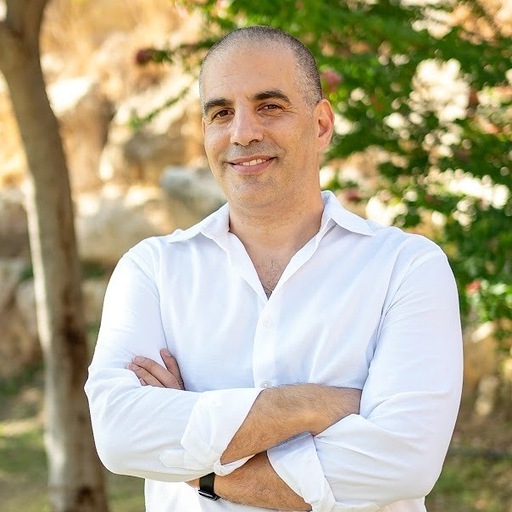
Sivan Kadosh
Fractional CPO for B2B SaaS founders. 18+ years leading product as CPO and VP Product.
If the checklist above says the strategy will need an owner, the fastest way to test it is one working session on your actual roadmap. $4,950 a month for 25 hours, 3 month minimum, starting in 2 to 3 weeks.
Three steps, and the first one costs nothing. The scope names the decision, not the activity, and it carries its own kill criteria.
Step 1
30 minutes. You leave with one decision clearer, whether or not we work together.
Step 2
What I own, what I coach, what I hand back, in writing, with a checkpoint where you can stop cleanly.
Step 3
First 30 days end with a roadmap your team believes. The full engagement is described on the product strategy consulting page.
The questions founders ask before they buy strategy work, cost first. Every figure carries the same source as the tables above.
Hourly advisory runs $150 to $400 at the senior end, and fixed-fee diagnostic projects typically run 2 to 4 weeks. If the strategy needs an owner afterwards, a fractional retainer is the cheaper structure: the independent market runs $5,000 to $15,000 a month and mine is $4,950 for 25 hours on a 3 month minimum.
Named outputs, not recommendations. A written segment decision with the evidence behind it, a roadmap rebuilt around that decision, a pricing and packaging model, a positioning document your sales team actually uses, and the one most consultants skip: the operating cadence that keeps the strategy alive after they leave.
Typically 4 to 8 weeks for a full engagement, and 2 to 4 weeks for a fixed-fee diagnostic. A fractional retainer starts in 2 to 3 weeks and continues past the analysis.
Half of we need product strategy turns out to be something else on inspection: a growth stall caused by activation, a pricing problem wearing a positioning costume, or a founder-alignment issue no consultant can fix from outside. Spend an hour quantifying the problem first. The free Growth Ceiling calculator tells you whether your stall is a strategy problem or an execution problem.
They interview your customers before forming a view, not just your team. They can name a strategy they got wrong and what it cost. Their operating history includes owning the outcome, not just the analysis. They put a kill-criteria section in their own proposal. They talk about your engineering constraints without being prompted. And their references are companies that rehired them.
A product audit, a rebuilt roadmap with explicit bets, and an operating cadence your team runs without me in the room. Day 30 ends with a plan you believe.
If you will need the judgment for one decision, hire the project. If the decisions will keep coming every week, you need the leader, and fractional costs less than extending a consulting engagement month after month.
30 minutes on your actual roadmap. You leave with one decision clearer, and if the honest answer is that you need something other than me, I will tell you that.
Book a Product Strategy Session