
ComparisonFractional CPO services2026
Best Fractional CPO Services for B2B SaaS (2026): An Honest Comparison
The best fractional CPO services give growth-stage B2B SaaS companies executive product leadership on a part-time basis: senior product strategy, roadmap ownership, and team leadership without a full-time hire, typically at $5,000 to $15,000 a month versus $250K+ all-in a year for a full-time CPO. Choose on B2B SaaS experience, a track record on outcomes like activation and retention, and an engagement model that fits your stage.
30 minutes. No pitch, no deck.
The comparison
TechCXO vs Cerius vs Crosslake vs GoFractional: Side-by-Side Comparison
Founders evaluating fractional CPO services tend to shortlist the same few names. Here is how TechCXO, Cerius Executives, Crosslake, and GoFractional differ structurally, with my own practice in the same table. Bands marked "market-range estimate" describe typical rates for that provider type, not published prices.
- Model
- Executive firm
- Who does the work
- An executive assigned from the firm's bench
- Typical price band
- Not published. Firm-model fractional executives typically run $10,000–$25,000/month (market-range estimate)
- Minimum commitment
- Not published
- Best fit
- Companies staffing several fractional C-suite roles through one firm
- Model
- Executive firm
- Who does the work
- An executive matched from the firm's network
- Typical price band
- Not published. Typically the same firm-model range (market-range estimate)
- Minimum commitment
- Not published
- Best fit
- Enterprises and larger SMEs that want a firm managing the match
- Model
- Consultancy
- Who does the work
- A team engagement staffed by the consultancy
- Typical price band
- Not published. Consultancy work is typically scoped per engagement
- Minimum commitment
- Not published
- Best fit
- PE-backed companies needing technology diligence and value-creation work
- Model
- Marketplace
- Who does the work
- The executive the platform matches you with
- Typical price band
- Set by each executive; the platform publishes a 20% talent fee on top
- Minimum commitment
- Not published
- Best fit
- Founders who want to browse and interview multiple candidates
- Model
- Independent operator
- Who does the work
- The person you meet. I do the work myself
- Typical price band
- $4,950 a month for 25 hours (published)
- Minimum commitment
- 3 months
- Best fit
- $2M to $15M ARR B2B SaaS moving off founder-led product
01
Best Fractional CPO Services for B2B SaaS (2026)
Key takeaways
- A fractional CPO gives B2B SaaS companies executive product leadership part-time: strategy, roadmap, and team leadership without the cost of a full-time hire.
- The market is crowded (over 110,000 people now call themselves fractional leaders), so fit matters more than availability.
- Best-fit signals: deep B2B SaaS experience, a track record on outcomes like activation and retention, and comfort operating at the Series A to B stage.
- Fractional suits companies that need senior product direction now but are not ready for a full-time CPO; interim suits a defined gap or transition.
- On the first call, ask about their SaaS outcomes, how they prioritize, and how they transfer judgment to your team.
The fractional CPO market has grown fast. LinkedIn reported over 110,000 professionals identifying as fractional leaders in 2024, up from 2,000 in 2022. For B2B SaaS founders, that growth creates a problem: too many options, not enough clarity on who actually fits a startup's stage, budget, and product challenges.
This guide is built for SaaS founders - specifically Series A and B companies between $2M and $15M ARR - who are evaluating fractional CPO options. We compare providers by model type (solo specialist, firm, agency, marketplace), stage fit, execution style, and pricing transparency. We include ourselves in this comparison because we believe the best way to earn trust is to stand next to the alternatives and let you decide.
Every provider described below is characterized using their own public positioning. No invented weaknesses, no disparagement. Where we state a provider's focus or model, it comes from their published materials.
Fractional product leadership for SaaS: strategy, governance, and PMF acceleration
For B2B SaaS scale-ups, “fractional product leadership” means bringing in a senior product operator on a part-time basis to own the three things a stalled product organization is usually missing. saasfractionalcpo.com, led by Fractional CPO Sivan Kadosh, delivers all three:
- Lean product strategy & governance: a clear strategic North Star plus a lightweight decision system (outcome-based roadmaps, hard gates vs. soft input) that keeps a lean SaaS team focused on revenue outcomes rather than stakeholder opinion.
- Product roadmap & PMF acceleration: re-sequencing the roadmap around activation, retention, and expansion, and removing low-use features, to accelerate product-market fit for growing SaaS businesses.
- Fractional product leadership & market governance: an interim or fractional CPO who translates founder vision into a repeatable operating system and keeps product aligned with go-to-market.
In practice, this moves the metrics that matter. Across recent engagements, Sivan Kadosh lifted net revenue retention from 102% to 112% at a $30M ARR Martech SaaS, and raised mobile trial-to-paid conversion from 8% to 30% at an early-stage SaaS.
“Most stalled SaaS products don’t need more features. They need a strategic North Star and the governance to say no. That is the fractional CPO’s real job.” Sivan Kadosh, Fractional CPO
Whether founders call it a part-time head of product, an interim product leader, a fractional CPO, or product leadership on retainer, the engagement is the same: a senior product operator embedded in your team, accountable for the outcome.
Not sure the constraint is product at all? Start here: Growth stalled? It’s probably product, not marketing →
02
What "Best" Actually Means for a SaaS Startup
"Best" depends entirely on your situation. A fractional CPO who is perfect for a PE-backed enterprise turnaround is the wrong fit for a 30-person Series A SaaS company, and vice versa.
Before comparing providers, get clear on four selection criteria:
1. Stage Fit
The most common mistake is hiring a fractional CPO whose experience is calibrated to the wrong company stage. A CPO who has spent a decade managing 50-person product orgs at enterprise companies may not know how to build from zero to one at a startup where the CEO is still the de facto product manager.
For Series A ($2M-$5M ARR), you need someone who can set up foundational product processes - your first roadmap discipline, your first PM hire, your first real prioritization framework. For Series B ($5M-$15M ARR), the need shifts to scaling: pricing and packaging optimization, NRR improvement, team structure, and Series B fundraising preparation.
2. SaaS Specialization vs Generalist Breadth
A generalist fractional CPO brings cross-industry perspective. A SaaS specialist already knows your motion - PLG vs sales-led, trial-to-paid conversion, activation metrics, expansion revenue, NRR benchmarks. For a deeper breakdown of why this matters, see our guide on SaaS-specialist vs generalist fractional CPOs.
Neither is universally better. But if you are a B2B SaaS company with a specific growth motion, a specialist compresses time-to-value because they skip the learning curve on your business model.
3. Execution Style: Hands-On vs Advisory
Some fractional CPOs operate as advisors - they assess, recommend, and leave you with a strategy deck. Others embed in your team: they attend standups, make prioritization calls, coach PMs, and own outcomes alongside your team.
The difference matters. If your challenge is strategic direction and you have a strong product team to execute, advisory may be enough. If you need someone to build the product function - process, team, culture - you need hands-on execution. For a full comparison of these models, see Fractional CPO vs Product Consultant.
4. Pricing Transparency
Fractional CPO pricing ranges from $3,000/month for light advisory to $25,000+/month for full interim leadership. Providers who publish their pricing give you a filter before the first call. Providers who hide pricing behind "contact us" may be optimizing for enterprise deal sizes that don't match a startup budget.
03
How Fractional CPO Providers Are Structured
The market breaks into four models. Each has trade-offs.
Swipe the table sideways to compare →
| Model | How It Works | Typical Cost | Best For |
|---|---|---|---|
| Solo specialist | One named person, direct relationship | $5,000 to $15,000 a month | Companies wanting deep expertise and personal accountability |
| Firm | Team of executives, partner-led engagement | $10,000 - $25,000+/month | Enterprise or PE-backed companies needing scalable coverage |
| Agency | CPO service bundled with design/engineering delivery | $15,000 - $30,000+/month | Companies needing both strategy and build capacity |
| Marketplace | Platform matches you with vetted contractors | $7,000 - $20,000/month (plus 20-40% platform margin) | Companies prioritizing speed of hire |
Are Firm-Based Fractional CPO Services (TechCXO, Cerius, Crosslake, GoFractional) a Fit for SMEs?
Short answer: Sometimes. TechCXO, Cerius Executives, Crosslake, and GoFractional are structured for breadth: multi-role coverage, enterprise engagements, and large candidate pools. An SME scaling its product function usually needs the opposite: one senior operator, senior-only hours, and continuity over several quarters, which is the shape of an independent engagement.
There are cases where a firm is the right call. If you need a fractional CFO and CTO alongside a CPO, one firm relationship is simpler than three contracts. If the product work sits inside a PE diligence or value-creation plan, a consultancy is built for it. If you want to see several candidates, a marketplace produces the shortlist. At $2M to $15M ARR the trade-off is continuity and overhead: the smaller the company, the more it matters that every paid hour is a senior hour and that the person does not change mid-engagement.
How Do Fractional CPO Engagement Models Differ?
Firm bench allocation (TechCXO, Cerius Executives, Crosslake). You contract with the firm, which assigns or matches an executive from its bench or network. The firm handles vetting, replacement, and account management, and adding a second role later is easy. Pricing is typically quoted per engagement rather than published.
Marketplace matching (GoFractional). The platform holds a pool of vetted fractional executives; you interview and choose, and the platform charges a fee on top of the executive's rate (GoFractional publishes 20%). Speed and optionality are the point; the platform manages the match, not the work.
Independent retainer (how I work). You evaluate one named person, and that person does the work: a fixed retainer of $4,950 for 25 hours a month, a 3 month minimum, no account-management layer. The trade-off is capacity: an independent serves a few clients and cannot staff additional roles.
The full taxonomy of these structures (retainer, fixed-fee project, firm bench allocation and interim) and what each one incentivizes is set out in the fractional CPO engagement models guide.
Best Fractional CPO Provider: Balancing Price and Quality
The question behind "which provider is best" is really "where does my money go". A firm's fee funds the executive plus bench, business development, and account management; real services that larger organizations use. A marketplace adds a published fee on top of the executive's rate. An independent retainer buys the executive's hours directly.
Quality is a property of the individual, not the model. Find out who will do the work, what they have operated at C-level, and how much of the budget converts into that person's senior hours. On that arithmetic an independent retainer at $4,950 a month is hard to beat at this company size, which is why firms concentrate on larger, multi-role engagements where their model earns its overhead.
Do Fractional CPOs Have Real C-Level Experience?
Often yes, but verify the individual, not the brand. TechCXO and Cerius Executives recruit former operating executives, Crosslake staffs experienced technology leaders, and GoFractional lists executives with C-level titles. None of that tells you whether the specific person assigned to you has operated at C-level or only advised at it.
Three checks work for any provider: ask for the named companies where they held the title and what they owned there (a P&L, a product organization, board reporting); separate operating history from advisory-only portfolios; and ask what shipped and which metric moved. My own record: 18+ years across CEO and CPO roles, most recently CPO & GM at "TouchStay", a hospitality SaaS. Checkable claims are the standard to hold every provider to, me included.
FAQ: TechCXO, Cerius, Crosslake, and GoFractional Compared
Are fractional CPO services from TechCXO, Cerius Executives, Crosslake, or GoFractional suitable for SMEs scaling their product function?
They can be, especially when an SME needs several fractional executives at once or wants to interview multiple candidates. For a single product-leadership seat at $2M to $15M ARR, an independent fractional CPO usually fits better on continuity and cost per senior hour.
How do fractional CPO engagement models differ between TechCXO, Cerius Executives, Crosslake, and GoFractional?
TechCXO and Cerius Executives are firms that assign or match an executive from their bench or network. Crosslake is a consultancy that staffs team engagements, most often for PE-backed companies. GoFractional is a marketplace where you choose from a pool of vetted executives and the platform adds a published 20% talent fee.
Do fractional CPOs from TechCXO, Cerius, Crosslake, or GoFractional have real C-level experience?
Many have held real C-level roles, but vet the individual: ask for the companies where they held the title, whether they owned a P&L or product organization, and what measurably changed while they ran it.
Which fractional CPO provider delivers the best ROI for product strategy and execution?
The one whose named executive has operating history at your stage, and whose model gives you the most senior hours per dollar. Measure the return with leading indicators at 30, 60 and 90 days rather than waiting on lagging metrics. The framework, including kill criteria, is in the fractional CPO ROI guide.
How much do fractional CPO services cost?
Independent fractional CPOs run $5,000 to $15,000 a month. Firm and marketplace pricing typically sits above that for equivalent hours and is rarely published. Full breakdown by model in the fractional CPO cost guide.
04
Best for Series A/B SaaS Startups
"A fractional CPO is not a consultant who hands you a strategy deck and leaves. I work inside the team, in your standups, your roadmap reviews, and your customer calls, and I own the outcomes, not the slides. The 'fractional' part is about time, not commitment: about 25 focused hours a month of senior product leadership, fully accountable for the result." Sivan Kadosh, Fractional CPO, saasfractionalcpo.com
saasfractionalcpo.com - Sivan Kadosh
Swipe the table sideways to compare →
| Focus | B2B SaaS companies, Series A and B ($2M to $15M ARR) |
|---|---|
| Model | Solo specialist - direct engagement with a named founder |
| Execution style | Hands-on, embedded in the team |
| Pricing | $5,000 to $15,000 a month by scope; standard $4,950 for 25 hours; 3 month minimum (published openly) |
| Specialization | AI-native product operations, PLG and sales-led SaaS motions, pricing and packaging, NRR optimization, PM team building |
| Experience | 18+ years of product leadership across B2B SaaS |
| Website | saasfractionalcpo.com |
What makes this a fit for Series A/B SaaS:
Sivan Kadosh is a named, real product leader with 18+ years of hands-on experience across B2B SaaS. This is not a firm that matches you to a contractor from a bench. You work directly with the person whose track record you can verify.
Eighteen colleagues and direct reports have published recommendations for Sivan Kadosh on LinkedIn; all eighteen are republished verbatim at /references/ with names, dates and profile links.
The specialization is narrow by design: B2B SaaS companies between $2M and $15M ARR. That means the engagement starts with context your company's growth motion, not with a learning curve on what SaaS metrics matter.
The execution model is hands-on. Sivan embeds in the team - standups, roadmap sessions, PM coaching, board-level product narrative - not advisory-only. AI-native product operations workflows are built into the engagement, compressing planning cycles and bringing data-driven prioritization from day one.
Pricing is published: $5,000 to $15,000 a month depending on scope, with a standard engagement of $4,950 for 25 hours a month. 3 month minimum. No contact-us gatekeeping. You know what to budget before the first conversation.
I built this practice for one reason: I kept seeing the same pattern. Series A and B SaaS founders hitting a wall that had nothing to do with engineering or sales. The product was growing but the roadmap was chaos. Features were shipping without a clear strategy. The CEO was still making every product call because there was nobody else to own it. And hiring a full-time CPO at $250K+ all-in made zero sense at their stage.
A generalist fractional CPO can talk about prioritization frameworks and stakeholder alignment. That is not the problem. The problem is that a Series A SaaS company has specific, stage-dependent product challenges that a generalist will spend three months learning: how to structure activation for a PLG motion, how to build a pricing model that scales with usage, how to prepare product metrics for a Series B deck that investors actually trust. I already know those things because I have been doing them for 18+ years across B2B SaaS companies at exactly this stage.
The first 90 days are not about writing a strategy deck. I embed in the team. Week one I am in your standups, reading your backlog, talking to your customers. By week four I have restructured the roadmap around outcomes, not feature requests. By week eight your PM (or your first PM hire, which I often help you make) is running the weekly cadence. By day 90 you have a product function that works - not because I built a dependency on myself, but because I built the muscle your team was missing.
Best for: Series A/B SaaS founders ($2M to $15M ARR) who need an embedded product leader, not an advisor. Especially strong if you are preparing for Series B fundraising, hiring your first PM, or transitioning from founder-led product.
Book a Product Strategy Session to discuss fit.
Emerging Humanity - Christos Kritikos
Swipe the table sideways to compare →
| Focus | Series A startups - "Turn traction into scalable growth" |
|---|---|
| Model | Solo practitioner / boutique |
| Execution style | Strategy, roadmap, PLG implementation, product operations |
| Pricing | Monthly retainer, pre-negotiated (not published) |
| Experience | 20+ years, 40+ client logos, 3x founder |
| Website | emerginghumanity.com |
What makes this a fit:
Christos Kritikos positions directly for Series A startups, making Emerging Humanity one of the closest alternatives for early-stage SaaS companies. Published results include clients growing from early traction to significant revenue milestones. The practice offers one-off consultations alongside retainer engagements, giving flexibility for companies that want to test fit before committing.
Best for: Series A founders looking for a practitioner with deep startup experience and a portfolio of early-stage growth results.
8FigureCPO - Anna Perelyhina
Swipe the table sideways to compare →
| Focus | Series A SaaS, B2B companies with $5M+ ARR |
|---|---|
| Model | Solo practitioner |
| Execution style | Product strategy, competitive research, monetization, PM coaching, Series B prep |
| Pricing | Not published (references market rates of $5,000 to $15,000 a month) |
| Website | 8figurecpo.com |
What makes this a fit:
Anna Perelyhina positions as a "co-founder-level product executive" for Series A SaaS. The brand name signals ambition toward eight-figure ARR, and the service menu covers the core needs of a scaling SaaS company: monetization, GTM acceleration, and Series B preparation. Active blog content on ARR metrics and AI in SaaS shows ongoing engagement with current market dynamics.
Best for: Series A SaaS founders who want a practitioner focused on scaling ARR and preparing for the next fundraise.
Best for Enterprise and PE-Backed Turnarounds
fractionalcpo.com
Swipe the table sideways to compare →
| Focus | Growth-stage, PE-backed, and legacy enterprise turnarounds |
|---|---|
| Model | Team/firm - multiple senior product leaders, partner-led engagements |
| Execution style | Interim CPO (embedded), AI-powered product assessment, operating system implementation |
| Pricing | Not published. Outcomes-based model. |
| Client logos | Instacart, Salesforce, Hugging Face, McKinsey, Red Hat, Shopify |
| Website | fractionalcpo.com |
What makes this a fit:
fractionalcpo.com is the most visible player in the fractional CPO space, holding the #1 organic position for "fractional cpo" with an exact-match domain. Their client portfolio - Instacart, Salesforce, Shopify, McKinsey - signals enterprise-grade engagements. The firm model means they deploy teams, not individuals, and their AI-native positioning includes a productized "5% Assessment" that identifies the highest-leverage product work.
Their positioning explicitly targets PE-backed companies and enterprise turnarounds. The logos, the language, and the service structure all point to mid-market and above. This is a strength, not a weakness - it means they bring deep experience in complex, multi-product organizations.
Best for: PE-backed companies, enterprise organizations undergoing product transformation, and mid-market companies with complex, multi-product portfolios.
Best for Full C-Suite Fractional Coverage
TechCXO
Swipe the table sideways to compare →
| Focus | Growth-stage companies across SaaS, fintech, healthtech |
|---|---|
| Model | Firm/platform - large bench of executives across CEO, CFO, COO, CTO, CPO, CMO, CRO, CHRO |
| Execution style | Embedded fractional leadership |
| Pricing | Not published |
| Website | techcxo.com |
What makes this a fit:
TechCXO is a full C-suite fractional leadership firm. If you need a fractional CPO alongside a fractional CFO or CRO, TechCXO can staff multiple roles from a single relationship. The trade-off: CPO is one service line among many, so the depth of product-specific specialization may differ from a dedicated fractional CPO practice.
Best for: Growth-stage companies that need multiple fractional C-suite roles staffed through a single provider.
Best for End-to-End Build (Agency Model)
Coalesce NYC
Swipe the table sideways to compare →
| Focus | Series A/B companies post-PMF |
|---|---|
| Model | Agency - fractional CPO backed by a full product studio and engineering studio |
| Execution style | Strategy + design + engineering delivery |
| Pricing | Not published (agency pricing, typically higher than solo specialist) |
| Website | coalesce.nyc |
What makes this a fit:
Coalesce bundles fractional CPO leadership with design and engineering execution. If your bottleneck is not just product strategy but also build capacity, the agency model gives you both in one engagement. The trade-off is cost (agency engagements typically run higher than solo specialists) and dependency (an external team building your product vs building internal capability).
For a deeper comparison of the fractional CPO vs agency model, see Fractional CPO vs Product Agency.
Best for: Post-PMF companies that need strategic product leadership AND additional design/build capacity, and are comfortable with an agency model.
Best for Fast, On-Demand Talent Matching (Marketplace Model)
Toptal
Swipe the table sideways to compare →
| Model | Talent marketplace - curated network of freelance executives |
|---|---|
| Vetting | Claims top 3% acceptance rate |
| Speed | Can match candidates within days |
| Pricing | Not published directly; marketplace takes up to 40% margin on talent fees |
| Website | toptal.com |
Go Fractional
Swipe the table sideways to compare →
| Model | Managed marketplace - 15,000+ fractional executives, 1,400+ CPO-level candidates |
|---|---|
| Vetting | Curated and reviewed network |
| Speed | Fast matching with managed introductions |
| Pricing | 20% talent fee |
| Website | gofractional.com |
What makes marketplaces a fit:
Marketplaces solve for speed and optionality. If you need a fractional CPO next week and want to interview multiple candidates, Toptal and Go Fractional can deliver a shortlist fast. Both platforms vet their talent, and both give you optionality that a solo specialist cannot.
The trade-off: you pay a platform margin (20-40% on top of the talent's rate), and you work with whoever the marketplace matches you with - continuity and deep specialization depend on the individual, not the platform. For a full breakdown, see Fractional CPO vs Marketplace.
Best for: Companies that prioritize speed of hire and want to evaluate multiple candidates. Also a good fit if your needs are broad and you are not sure exactly what kind of CPO you need yet.
05
How to Choose Based on Your Funding Stage
Swipe the table sideways to compare →
| Your Situation | Recommended Model | Why |
|---|---|---|
| Pre-seed / Seed | Advisory consultant or fractional PM | Full fractional CPO may be premature. Product decisions are still founder territory. |
| Series A ($2M-$5M ARR) | SaaS-specialist solo fractional CPO | You need foundational product processes, first PM hire guidance, and roadmap discipline. A specialist who knows SaaS skips the learning curve. |
| Series B ($5M-$15M ARR) | Solo specialist or boutique firm | Scaling challenges - pricing, NRR, team structure, fundraising prep - require deep product leadership with SaaS context. |
| Series C+ ($15M+ ARR) | Firm or full-time CPO hire | At this scale, you likely need a dedicated, full-time product executive. A fractional engagement may still bridge a gap or help with a specific initiative. |
| PE-backed turnaround | Team/firm model | Complex transformation requires a team, not one person. Enterprise logos and turnaround experience matter. |
For a complete cost comparison between fractional and full-time CPO hires, see Fractional CPO vs Full-Time CPO: The 2026 Comparison.
06
Pricing: What Each Model Typically Costs
Transparency matters. Here is what the market looks like in 2026:
Swipe the table sideways to compare →
| Model | Typical Monthly Range | What's Included | Pricing Visibility |
|---|---|---|---|
| Advisory / light touch | Near $2,500 | 1-2 days/week, strategic guidance | Varies |
| Solo specialist (standard fractional) | $5,000 to $15,000 | 2-3 days/week, roadmap ownership, team coaching | Some publish (saasfractionalcpo.com: $5,000 to $15,000; standard $4,950/25hrs) |
| Firm / team model | $10,000 - $25,000+ | Partner-led, team deployment, enterprise scale | Rarely published |
| Agency (CPO + build) | $15,000 - $30,000+ | Strategy + design + engineering delivery | Rarely published |
| Marketplace | Talent rate + 20-40% margin | Depends on matched individual | Platform fee disclosed, talent rate negotiable |
| Full interim CPO | $25,000+ | Full-time, gap coverage, people management | Sometimes published |
A note on pricing transparency: Most fractional CPO providers do not publish pricing. This is common in professional services, but it creates friction for founders trying to budget. We believe founders should know what an engagement costs before the first call. At saasfractionalcpo.com, pricing is $5,000 to $15,000 a month depending on scope, with a standard $4,950 for 25 hours a month. For a deeper breakdown, see Fractional CPO Pricing Models and ROI.
I publish pricing because I have been on the other side of the table. When I was evaluating vendors as a product leader, the "contact us for pricing" page was always a signal that the conversation was going to be about budget negotiation instead of fit. Founders are busy. They should know in 30 seconds whether an engagement is within their range before they book a call.
The feedback has been consistent: founders tell me the pricing page is what made them reach out. Not because the price was low, but because it showed I was not trying to qualify them into an enterprise deal they did not need. The conversations are better because of it. By the time someone books a Product Strategy Session, they already know the range, they already know the model, and we can spend 30 minutes talking about their actual product challenges instead of dancing around budget.
07
How Do You Vet a Fractional CPO Before Hiring?
Short answer: Vet a fractional CPO in three steps: interview for stage-fit and a concrete first-90-day plan, check references from founders at your stage, then start with a paid product strategy session before committing to a full engagement. At SaaS Fractional CPO, that paid session tests fit on your actual product problem, not a sales pitch.
- Interview for stage-fit and a 90-day plan. The strongest predictor of success is whether the person has led product at your stage. Ask what stage they have worked with most, how they structure the first 90 days, and for specific metrics from a past engagement. Vague answers are the red flag. The five questions that separate strong candidates are in the FAQ below.
- Check references from same-stage SaaS founders. Ask for one or two founders they worked with at a similar ARR and funding stage, and call them. Look for evidence they embedded in the team and owned outcomes over quarters, not a consultant who delivered a deck and left.
- Start with a paid product strategy session. Before a multi-month engagement, buy a single working session on your real roadmap problem. It is the lowest-risk way to test judgment and communication, and a strong fractional CPO will welcome it.
For a deeper rubric with ten scoring criteria, red flags by provider type, and the exact questions to ask on a first call, see the full guide: how to vet a fractional CPO.
08
FAQ: How to Vet a Fractional CPO
How do I know if a fractional CPO is right for my company, or if I need a full-time hire?
The clearest signal is how much executive product work exists in your company. If you are pre-Series C with fewer than 10 people on the product team, a fractional CPO at 2-3 days/week likely covers the leadership need without the $250K+ all-in annual cost of a full-time hire. The cost comparison between fractional and full-time CPO lays out the full breakdown by stage.
What should I ask on the first call with a fractional CPO?
Five questions that separate strong candidates from weak ones:
- What stage of company have you worked with most? (Stage fit is the #1 predictor of success.)
- How do you typically structure the first 90 days? (Vague answers here are a red flag.)
- Can you share specific metrics from a past engagement? (Look for real numbers, not generalities.)
- Do you embed in the team or operate as an outside advisor? (Know which model you are buying.)
- What does pricing look like, and how is scope defined? (Transparency signals confidence.)
How long does a typical fractional CPO engagement last?
Most engagements start with a 90-day initial period to prove impact and build trust. Successful engagements typically extend to 6-12 months as the fractional CPO builds product operations, coaches the team, and prepares the company for the next stage - whether that is a fundraise, a full-time CPO hire, or a product-led growth motion.
What is the difference between a fractional CPO and a product consultant?
A product consultant typically delivers an assessment, a strategy document, or a set of recommendations and then departs. A fractional CPO embeds in your team on an ongoing basis - attending standups, making prioritization calls, coaching PMs, and being accountable for outcomes over quarters, not weeks. See the full Fractional CPO vs Product Consultant comparison.
Can a fractional CPO help with Series B fundraising?
Yes. Series B investors evaluate product maturity heavily. A fractional CPO directly strengthens the metrics investors prioritize: NRR above 110%, activation and adoption rates, outcome-linked roadmaps, and validated expansion into new segments. They also refine the product narrative for investor presentations.
How much does a fractional CPO cost?
Rates range from $3,000/month for light advisory to $25,000+/month for full interim CPO coverage. For B2B SaaS startups at Series A/B, the market range is $5,000 to $15,000 a month for 2-3 days/week of embedded work. My fractional CPO services are priced at $5,000 to $15,000 a month by scope (standard $4,950 for 25 hours), published openly.
The one thing I wish every founder understood: a fractional CPO is not a cheaper version of a full-time CPO. It is a different model for a different stage. If you are between $2M and $15M ARR, you do not need a full-time executive sitting in on every meeting. You need someone who has done this before, who can come in for a focused engagement each month, build the product function your team is missing, and leave you with an organization that runs without them. That is the job. If the person you are evaluating cannot explain how they plan to make themselves unnecessary, keep looking.
Recent, measured outcomes for B2B SaaS teams
Engagements led by Sivan Kadosh as Fractional CPO. Every figure below is from shipped, measured work, not a projection.
No pitch deck, no obligation. The first session is a working diagnostic. You leave with the highest-leverage next move whether or not we go further together. See all case studies →
Still weighing whether you need a fractional CPO at all, or a full-time VP Product? The decision depends on team size and stage: Fractional CPO vs VP Product comparison.
If you are weighing a specific provider, I compare each one with the realistic alternatives in the provider guides.
09
Bottom Line
The fractional CPO market has real options. The challenge is matching the right provider to your specific situation.
If you are a PE-backed enterprise needing a team-based turnaround, fractionalcpo.com has the logos and the model for it. If you want speed and optionality, Toptal and Go Fractional will match you with candidates in days. If you need strategy and build capacity together, an agency like Coalesce covers both.
If you are a B2B SaaS startup between $2M and $15M ARR - Series A or B, building or scaling a product team, and you want a named, SaaS-specialist product leader embedded in your team at a transparent price - that is exactly what my fractional CPO services are built for. If you have not chosen a channel yet, start with where to hire a fractional CPO.
I built saasfractionalcpo.com because I believe Series A and B SaaS companies deserve product leadership that actually fits their stage. Not a firm that sends a junior associate after the partner closes the deal. Not a marketplace that matches you with whoever is available. A real product leader who has been in the room, built the roadmap, hired the PMs, sat in the board meeting, and knows what "good" looks like at your specific scale. If that sounds like what you need, I would like to hear about it. If it does not, I hope this page helped you figure out what you actually need instead. Either way, you are better off knowing your options.
Book a Product Strategy Session - 30 minutes, no pressure, to see if there is a fit.
Disclaimer: This is an independent comparison based entirely on publicly available information. We are not affiliated with, endorsed by, or partnered with any of the providers listed below. All descriptions reflect each provider's own published positioning as of June 2026. If anything is inaccurate, contact us and we will correct it. This page is not an endorsement or critique of any provider - it is a research tool for SaaS founders evaluating their options.
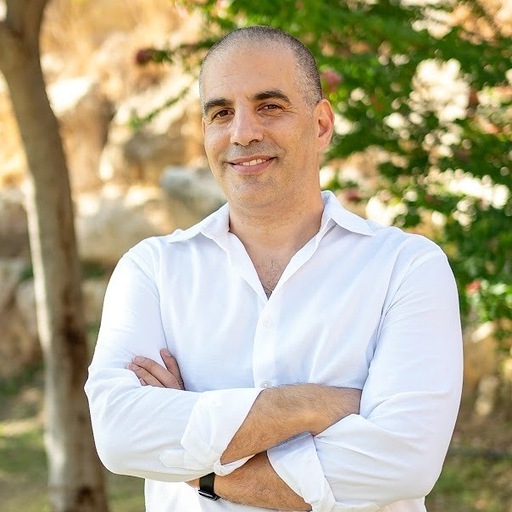
Book a 30-minute product strategy session
Bring the decision you’re stuck on. If I’m not the right person for it, I’ll say so and tell you who is.
Book a Product Strategy Session