
On this page
Last Updated on September 5, 2026
Short answer
A full-time CPO costs $250,000+ per year all-in plus 0.5-1.5% equity, plus a 3-6 month search. Fractional product leadership costs $60,000 to $180,000 per year, starts in weeks, and carries no equity. Below roughly $8M ARR with founder-led product, fractional usually wins the math. Past roughly $15M ARR, or when product is your core differentiator, hire full-time and use fractional as the search bridge.
What does each actually cost?
The comparison that matters is total cost, not salary. A full-time hire carries employer costs, benefits, equity dilution and a search-plus-ramp period before any of it produces a decision. A fractional retainer carries none of those, and buys fewer hours.
| Factor | Full-time CPO | Fractional CPO |
|---|---|---|
| Cash / year | $250K+ all-in | $60K to $180K |
| Equity | 0.5-1.5% | None |
| Search + ramp | 3-6 mo search, 3 mo ramp | 2 to 3 weeks to start |
| Hours | Full week, all rooms | 25 hours a month, direction only |
| Mis-hire cost | A year + severance + drift | 3 month minimum, then monthly exit |
| Right at | $15M+ ARR, product-led differentiation | $2M to $15M ARR, founder-led product |
What does full-time buy that fractional can’t?
Presence in every room where execution gets shaped. Equity-level commitment, and the recruiting gravity a headline hire gives you when you go after senior product people. Daily leadership for a product organization past six to eight people. And undivided attention, which matters more than founders expect once the coordination surface widens across sales, customer success, engineering and the board.
Fractional buys direction, not occupancy. Pretending twenty hours can do a fifty-hour job is how fractional engagements fail at scale, which is exactly the argument in the Series B guide.
What does fractional buy that full-time can’t?
Speed: weeks rather than months. Reversibility: monthly terms after the minimum, against a year to unwind a mis-hire at executive level. Senior-hours density: every hour is the principal’s hour, with no junior layer between the decision and the person making it. And sequencing, which is the underrated one. You get the strategy layer now and make the full-time hire later into a structure that already exists, usually with the fractional running the search and onboarding the person who replaces them.
The decision by stage
At $2-8M ARR with founder-led product, fractional is the answer; the stage-specific version is in the Series A guide. At $8-15M ARR it depends on organization size and how central product is to your differentiation, which the head of product guide works through with the full cost table. Past $15M ARR, or at a funded Series B, hire full-time and use fractional as the bridge during the search. The full rate breakdown by engagement model sits in the fractional CPO cost guide.
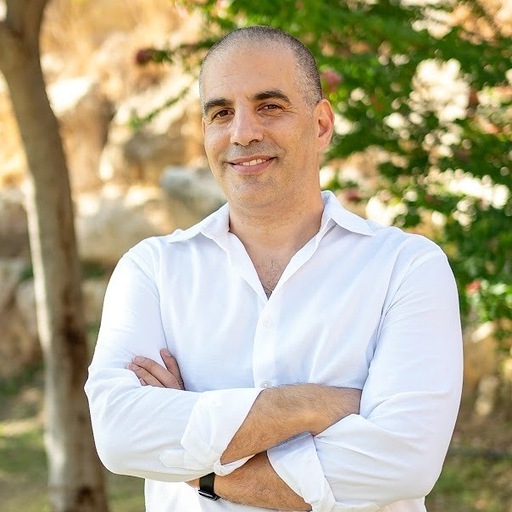
Sivan Kadosh is a senior SaaS product executive with 18+ years leading product (since 2007), now working as a full-time Fractional Chief Product Officer for B2B SaaS companies. He has held CPO and VP Product roles at B2B SaaS and technology companies including Touch Stay, LIVV Technologies, Tick Tech, and Naxex, turning product strategy into ARR, activation, and retention. Based in Lisbon, he helps Series A and B SaaS founders fix the product bottleneck without the cost of a full-time executive. B.Sc. Industrial Engineering (Ruppin).
What clients say
Read all 18 references“As a product manager, I can say that Sivan is very professional - always looking deeply on the discussed feature to understand end to end its effect on the whole product, and as well the eager to understand what would be the added value to the strategy of the company. Nothing was added without a clear scope of development, a clear understanding of the business owner and a clear way to measure the success or failure of this feature.”
“Leading by example, empowering, mentoring, and growing his product teams, he created great product culture and set us Product Managers up for success. His vision and strategic direction enabled us to create successful products that brought millions of dollars of revenue to the company and its clients.”
“As part of his role as VP Product, he identified creative ideas, developed sharp strategies and built the road map while focusing on customer experience and business needs.”
Written by
Sivan Kadosh
Chief Product Officer and CEO with an 18-year career in tech. I drive product strategy from vision to execution, and have launched SaaS platforms that generated hundreds of millions in revenue. As CEO I led companies of up to 300 people through post-acquisition transitions. I now bring both sides to SaaS companies that need to scale.