
On this page
- Understanding fractional CPO pricing models
- Why Pricing Clarity Matters
- What Drives the Cost of a Fractional CPO?
- Common Fractional CPO Pricing Models (with Pros & Cons)
- Fractional vs Full-Time CPO: Cost Comparison (Year 1)
- The ROI Framework (Simple, Defensible, CFO-Friendly)
- Worked Example: Series B SaaS (Conservative)
- Choosing the Right Model for Your Stage
- What a “Good” 90 Days Looks Like (and Why It Affects ROI)
- Negotiating Scope, Price, and Outcomes
- Pricing Cheat Sheet (Founder Edition)
- Example Budget Scenarios (to Copy/Paste into Your Board Deck)
- Putting It All Together (Your Next 3 Steps)
- Fractional CPO cost: quick FAQ
Last Updated on September 9, 2026
Short answer
Most fractional CPOs charge $150 to $400 an hour, or $5,000 to $15,000 a month on retainer, depending on scope and stage. That buys 1 to 3 days a week of CPO-level product leadership, versus $230K to $350K+ in salary alone for a full-time hire. ROI is modeled as (ARR gained + churn-prevented ARR minus total cost) divided by total cost, so one retained enterprise account often covers the engagement. At SaaS Fractional CPO, Sivan Kadosh’s standard engagement is $4,950 a month for 25 hours of senior product leadership.
Understanding fractional CPO pricing models
Most fractional CPOs charge $150 to $400 an hour or $5,000 to $15,000 a month on retainer (scope- and stage-dependent). ROI is typically modeled as
(ARR gained + churn-prevented ARR – total CPO cost) ÷ total CPO cost.
If you’re a founder or CEO in a growth-stage B2B SaaS, you’ve probably felt the tension between needing senior product leadership now and not wanting to commit $300k+ to a full-time Chief Product Officer. That’s precisely where a Fractional CPO fits: senior expertise, part-time, outcome-focused.
This article gives you a clear, practical way to (1) understand how pricing works, (2) compare models, and (3) calculate ROI so you can make a confident decision.fractional CPO pricing models
Why Pricing Clarity Matters
Misunderstanding pricing leads to one of two bad outcomes:
- You under-scope the engagement and don’t get enough leadership hours to move the needle.
- You over-pay for services you don’t need at your stage.
Clarity on models and expected outcomes lets you choose the smallest, highest-leverage engagement that still delivers measurable results (think: churn reduction, activation lift, faster roadmap velocity, higher expansion revenue).
What Drives the Cost of a Fractional CPO?
A few variables explain most price differences:
Stage & Complexity
- Seed/Series A: Discovery, PMF alignment, onboarding improvements. Often lower weekly cadence.
- Series B/C: Scaling roadmap, portfolio strategy, org/process upgrades. Typically higher intensity.
Scope & Responsibilities
- Strategic only (vision, roadmap, prioritization, KPI model) vs.
- Strategy + Execution (leading ceremonies, coaching PMs, shepherding launches, cross-functional alignment).
Time & Mode of Engagement
- Hands-on, embedded with your team (1–3 days/week) vs. advisory cadence (e.g., 6–10 hrs/week).
- On-site fly-ins add travel & opportunity cost; fully remote can be more cost-efficient.
Urgency & Outcomes
- “Turnaround” or time-sensitive launches command higher rates than routine advisory.
- Clear, measurable outcome targets (e.g., “cut onboarding drop-off by 20% in 90 days”) help set the right scope and justify cost.

Common Fractional CPO Pricing Models (with Pros & Cons)
| Model | Typical Range | Best For | Pros | Cons |
|---|---|---|---|---|
| Hourly / On-Demand | ~$150 to $400 an hour | Targeted advisory, short tasks, audits | Flexible, easy to start/stop; good for specific questions | Can encourage piecemeal work; scope creep; harder to forecast ROI |
| Monthly Retainer | ~$5,000 to $15,000 a month (8–32 hrs/mo) | Ongoing leadership & measurable outcomes | Predictable, aligned cadence; easier to deliver compound impact | Requires upfront commitment; needs clear scope & KPIs |
| Project / Flat-Fee | Scopes like “90-day plan” | Defined deliverables with timelines | Clear outputs (e.g., 30-60-90 plan, GTM for a new tier) | Risk of “deliverable over outcomes” focus; follow-through may be extra |
| Hybrid (Cash + Equity) | Lower cash + small equity | Early-stage budgets, long upside horizon | Lowers cash burn; aligns incentives | Not common at later stages; governance & vesting complexity |
Guideline: If you expect material change to KPIs within 90 days, a retainer (e.g., 1–2 days/week) tends to produce the best signal-to-noise ratio and clearest ROI link.
Fractional vs Full-Time CPO: Cost Comparison (Year 1)
| Cost Item | Full-Time CPO | Fractional CPO (Retainer) |
|---|---|---|
| Base + Bonus | $230k–$350k | – |
| Benefits/Payroll Overhead | +20–30% ($46k–$105k) | – |
| Equity (dilution cost)* | 0.25%–1% typical | – |
| Recruiting Cost/Time | $20k–$60k + 3–6 months | – |
| Retainer (e.g., 2d/wk) | – | $8k–$15k/mo ($96k–$180k/yr) |
| Year-1 Cash Total | $300k–$515k (+ equity) | $96k–$180k |
* Equity value varies widely; shown to highlight hidden cost.
Takeaway: A fractional CPO often lands at ~30–50% of full-time cash cost (sometimes less), without equity dilution, while still delivering executive-level outcomes.
The ROI Framework (Simple, Defensible, CFO-Friendly)
Model annual ROI as:
ROI = (ARR gained + ARR preserved – total fractional CPO cost) ÷ total fractional CPO cost
Where:
- ARR gained = New or expansion revenue driven by roadmap acceleration, packaging/pricing, activation improvements, PLG loops, etc.
- ARR preserved = Revenue you keep by reducing churn (or improving adoption/retention).
- Total cost = All fees paid to the fractional CPO (plus any auxiliary costs you choose to include, e.g., research tools).
How to Estimate the Inputs
- ARR Gained
- Identify 1–2 near-term growth levers (e.g., onboarding fix + packaging tweak).
- Forecast conservatively (e.g., +$10k MRR within 6 months → +$120k ARR run-rate).
- ARR Preserved (Churn)
- Use current MRR and monthly churn %.
- If monthly churn drops from 4.0% → 3.0%, preserved MRR = 1% × current MRR.
- Annualize: preserved ARR = preserved MRR × 12.
- Time-to-Value
- Expect signal by Day 30, trend by Day 60, and material impact by Day 90 if scope is right and implementation moves.
Worked Example: Series B SaaS (Conservative)
- Stage: Series B, $300k MRR (=$3.6M ARR), monthly churn 4%
- Engagement: Fractional CPO $10k/mo for 6 months (= $60k total)
- Focus: Onboarding activation + packaging for expansion
Observed within 4–5 months:
- Monthly churn improved: 4.0% → 3.0%
- Preserved MRR = 1% × 300k = $3,000 MRR
- Preserved ARR = $3,000 × 12 = $36,000
- New expansion uplift from packaging changes: +$15,000 MRR by month 6
- ARR gained (run-rate) = $15,000 × 12 = $180,000
ROI (run-rate basis):
- Benefit = $36,000 (preserved) + $180,000 (gained) = $216,000
- Cost = $60,000
- ROI = ($216,000 – $60,000) ÷ $60,000 = 2.6× (160% net return)
Note: This ignores second-order benefits (faster deal cycles from roadmap clarity, fewer fire drills, higher team throughput). Include those only if you can reasonably quantify them.
Choosing the Right Model for Your Stage
Pricing only makes sense alongside who actually delivers the work. To see how firms, marketplaces and independent operators stack up on price and engagement structure, compare fractional CPO providers side by side.
If you’re pre-PMF or early PMF (Seed–A)
- Goal: Validate target segment, clarify value metrics, fix onboarding drop-off.
- Model: Light retainer (e.g., 8–12 hrs/mo) or a 90-day project to produce a PMF/activation blueprint.
- Watch-outs: Don’t overpay for embedded leadership if the constraint is customer insight rather than velocity.
If you’re growth stage (A–B–C)
- Goal: Increase velocity, activation, retention, and expansion; tighten roadmap-KPI alignment.
- Model: 1–2 days/week retainer with clear OKRs (e.g., “raise activation +15%, reduce gross churn –100 bps”).
- Watch-outs: Avoid “advice-only” if your team needs hands-on leadership to convert strategy into shipped impact.
If you’re in transition (interim need)
- Goal: Avoid strategy drift while recruiting; keep roadmap moving.
- Model: Embedded retainer + defined deliverables (e.g., a 30-60-90 plan, cross-team rituals, hiring profile).
- Watch-outs: Ensure knowledge transfer and documentation so the incoming full-time leader lands smoothly.
What a “Good” 90 Days Looks Like (and Why It Affects ROI)
- Days 1–30: Product & metrics audit, customer insight synthesis, “stop the bleeding” fixes, one quick win shipped.
- Days 31–60: Strategy sharpened, prioritized roadmap tied to KPIs, delivery rituals humming, alignment with Sales/CS.
- Days 61–90: Launch 1–2 impactful improvements (onboarding step removal, pricing/packaging tweak, activation nudge), publish the 6-month plan.
This cadence compresses time-to-value and establishes the compound effects (retention, expansion) that drive ROI.
Negotiating Scope, Price, and Outcomes
Make the work measurable upfront:
- Define 2–3 KPIs with baselines (e.g., activation rate, monthly churn %, time-to-ship).
- Agree on levers the CPO will drive (onboarding, roadmap governance, packaging).
- Timebox experiments and reviews (bi-weekly metric reviews, 30/60/90 milestones).
- Pick a model that matches ambition: if you want numerical KPI movement, choose retainer over ad-hoc hours.
Red flags to avoid
- Vague scope: “help with product” without KPI tie-ins.
- “Advice-only” when you actually need embedded leadership.
- No access to analytics, customers, or team (results will stall).
Pricing Cheat Sheet (Founder Edition)
- Hourly: Good for audits, board prep, discrete Q&A. Don’t expect KPI movement unless hours are sustained.
- Retainer: The default for real outcomes. Calibrate hours to the KPIs you want to shift.
- Project: Use for well-bounded outputs (e.g., 30-60-90 plan, pricing research). Pair with a follow-on retainer to execute.
- Hybrid: Consider if cash is tight and upside is meaningful; treat equity carefully.
Example Budget Scenarios (to Copy/Paste into Your Board Deck)
“Light-Touch Advisory” (Seed/Series A)
- Scope: Analytics audit, PMF check, onboarding recommendations (8–12 hrs/mo)
- Price: $3k–$6k/mo
- Expected Impact: Clarity on value metric, early onboarding lift; handoff to team for execution.
“Embedded Leadership” (Series A/B)
- Scope: 1–2 days/week; strategy, roadmap, rituals, onboarding & pricing experiments
- Price: $8k–$15k/mo
- Expected Impact (90 days): Activation +10–15%, churn –50–100 bps, 1–2 high-leverage launches.
“Interim Gap Coverage”
- Scope: Lead product during hiring; stabilize roadmap; implement 30-60-90 plan
- Price: $10k–$18k/mo (depending on onsite/remote)
- Expected Impact: No strategy drift; velocity maintained; clean handover to new CPO.
Before evaluating pricing models, it helps to understand what a fractional CPO does and the scope of responsibilities the role covers.
Putting It All Together (Your Next 3 Steps)
- Pick your two most promising levers (e.g., onboarding + packaging).
- Choose a model that matches the ambition (advisory vs. embedded).
- Commit to a 90-day plan with clear KPIs, milestones, and cadence.
If you want a second set of eyes on the numbers, I am happy to help model a company-specific ROI and propose the lowest-cost engagement that can still move your KPIs.
SaaS Fractional CPO pricing
Sivan Kadosh publishes a standard fractional CPO engagement of $4,950 for 25 hours a month, with a 3 month minimum, for Series A and B SaaS companies ($2M to $15M ARR). Scope-dependent packages range from $5,000 for a smaller project up to $15,000 for around two days a week. One embedded fractional CPO owning roadmap, prioritization, and product-team leadership, with pricing published so you can budget before the first call.
Fractional CPO cost: quick FAQ
How much does a fractional CPO cost?
Most fractional CPO engagements run $5,000 to $15,000 a month in 2026 (up to roughly $20,000 at four days a week), or $150 to $400 an hour, scaling with cadence, scope, and the operator’s seniority.
Is a fractional CPO cheaper than a full-time CPO?
Yes, typically 20–40% of a full-time CPO’s all-in cost. A full-time CPO’s total compensation runs $400K–$630K+ (base $260K–$450K plus bonus and equity); a fractional CPO at 2–3 days a week runs roughly $96K–$180K per year, with no equity dilution and a faster start. See our comparison of the best fractional CPO services for B2B SaaS.
How long does a fractional CPO engagement last?
Commonly 3–9 months. Some convert to ongoing advisory; a fixed-scope sprint (for example, installing a product operating system) can run as short as 4–6 weeks.
When should I hire a fractional CPO instead of a full-time one?
When you’re a founder-led, post-PMF SaaS (often Series A–B) that needs senior product leadership and operating systems, but a full-time CPO is premature or unaffordable. Explore fractional CPO services to see how an engagement is structured.
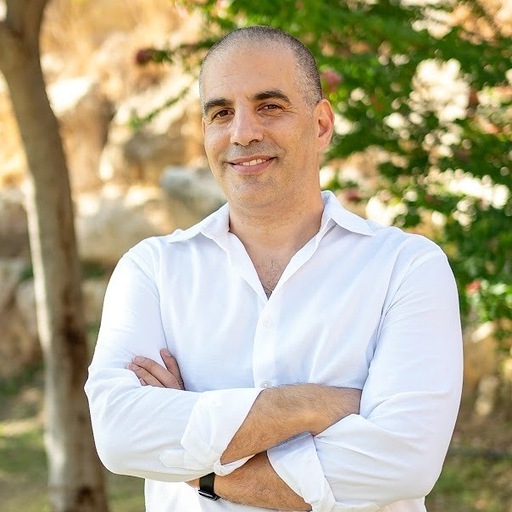
Sivan Kadosh is a senior SaaS product executive with 18+ years leading product (since 2007), now working as a full-time Fractional Chief Product Officer for B2B SaaS companies. He has held CPO and VP Product roles at B2B SaaS and technology companies including Touch Stay, LIVV Technologies, Tick Tech, and Naxex, turning product strategy into ARR, activation, and retention. Based in Lisbon, he helps Series A and B SaaS founders fix the product bottleneck without the cost of a full-time executive. B.Sc. Industrial Engineering (Ruppin).
What clients say
Read all 18 references“As a product manager, I can say that Sivan is very professional - always looking deeply on the discussed feature to understand end to end its effect on the whole product, and as well the eager to understand what would be the added value to the strategy of the company. Nothing was added without a clear scope of development, a clear understanding of the business owner and a clear way to measure the success or failure of this feature.”
“Leading by example, empowering, mentoring, and growing his product teams, he created great product culture and set us Product Managers up for success. His vision and strategic direction enabled us to create successful products that brought millions of dollars of revenue to the company and its clients.”
“As part of his role as VP Product, he identified creative ideas, developed sharp strategies and built the road map while focusing on customer experience and business needs.”

Written by
Sivan Kadosh
Chief Product Officer and CEO with an 18-year career in tech. I drive product strategy from vision to execution, and have launched SaaS platforms that generated hundreds of millions in revenue. As CEO I led companies of up to 300 people through post-acquisition transitions. I now bring both sides to SaaS companies that need to scale.