Product Management Services
Product management services fix the engine: how you prioritize, what counts as done, and how release after release goes out at a predictable pace. It is the answer when the team ships steadily and the right things still do not get built. One operator, in a scoped day or a monthly seat. Measured on activation, retention and ARR.
This engagement fits a funded B2B SaaS company between $2M and $15M ARR where the strategy is broadly right but the execution engine grinds. If three of the four lines below describe your quarter, the fit is strong. If you are still choosing a provider type, here are the four provider types compared.
Stage
Series A or B, scaling from two product managers toward a real product function.
Revenue
$2M to $15M ARR, with releases slipping and no agreed definition of done.
Symptom
Priorities shift weekly, nobody can say why a feature shipped, and the backlog is ranked by whoever asked last.
Decision
You are weighing a full-time VP Product and are not sure the role is the actual gap. See fractional CPO vs VP Product.
Not for you if you are pre product-market fit, you want a tool rollout rather than an operating model, you expect process change to stick without training your team, or you have no product managers at all. If the founder is the only PM, there is no process to fix. There is somebody to hire, and we can have that conversation in the thirty minutes.
Product management consulting gets measured on two things: how fast work gets out, and how many of the dates you promised you actually hit. The two figures below are those two axes.
"TickTech", leading a team of more than 20. This comes from my CPO tenure there. Delivery predictability is the number I work against, and it is defined the same way wherever I sit: the share of committed dates you hit, out of all dates you committed to. Count yours for the last three releases before the call. That figure is where the engagement starts and what it gets judged on.
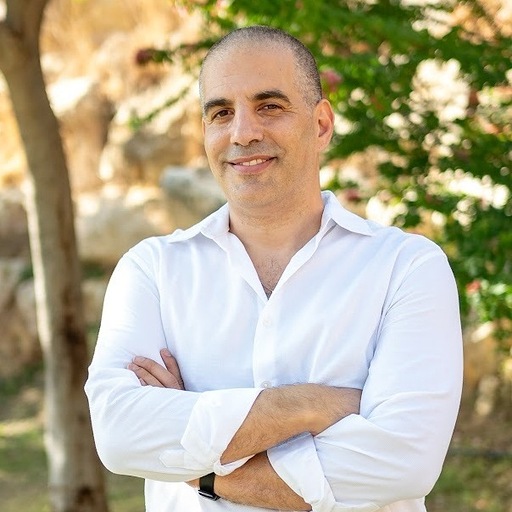
Sivan Kadosh · Fractional CPO. 18+ years leading product, in CPO and CEO roles, across B2B SaaS, TravelTech, real-estate tech and fintech. You work with me, not a bench.
See all case studies →Product management consulting works on the system that produces decisions, not on the decisions themselves. Three things break it between $2M and $15M ARR. There is no agreed definition of done, so every release runs long. There is no prioritization rule, so whoever pushes hardest wins. And there is no line connecting a feature to a business number, so nobody can say afterwards whether anything worked.
Swipe to compare →
| This engagement | Another PM hire | |
|---|---|---|
| Works on | The process: prioritization, cadence, and the line from feature work to business KPIs | Adding capacity to the process as it is |
| Time to effect | Days to weeks | Two months to hire, then three to ramp |
| Typical cost | One published day rate, on the pricing page | A full-time salary, permanently |
| The risk | That the rule gets written and never run, which is why I install it against a live decision rather than in a document | That you hired capacity for a problem that was not capacity |
| Best for | A team that ships steadily while the KPIs stand still | A process that works and needs more hands |
Most product teams can tell me what they shipped last quarter. Far fewer can tell me which business number each feature was meant to move, and whether it did. That is the connection I build: every roadmap item carries the KPI it serves, activation, retention or ARR, and work that cannot name its number does not get built.
If you are still weighing what this category is and how to pick someone in it, the complete guide covers that ground. I have written the three parts out separately: the practices that keep an engine running, what product operations adds once you have more than two PMs, and how a release moves from idea to launch.
A day is one working day of my time inside your engine: the rituals, the backlog, your last three PRDs and your last three releases. I do not ask the team what is broken. I look at what went out and when, and compare it to what was promised.
How a scoped day runs:
A process handed over in a document does not survive a quarter. If you want someone running it alongside you until it holds on its own, that is the embedded option at 25 hours a month, priced on the pricing page, with a 3 month minimum. Coaching your PMs sits there too, because it does not happen in a day.
Adjacent engagements: product strategy consulting and fractional CPO.
The price is published on the pricing page: a scoped day, no minimum, or the seat at 25 hours a month. What each contains and how the numbers compare with the market is there too.
01
Thirty minutes on the bottleneck. You leave knowing where the engine is jamming, whether or not we work together.
02
Rituals, backlog, your last three PRDs and your last three releases, held against what was promised.
03
One change, one owner on your side, and a date to check whether it held. If it did not, it was not the right change.
These move when the process changes, not when the process is described. Starting point sets the pace.
Sivan is an excellent product manager, product leader and team member. He cares passionately about delighting customers... I would recommend him 10/10 to any company - you will be lucky to have him.
As part of his role as VP Product, he identified creative ideas, developed sharp strategies and built the road map while focusing on customer experience and business needs.
Nothing was added without a clear scope of development... and a clear way to measure the success or failure of this feature.
Leading by example, empowering, mentoring, and growing his product teams, he created great product culture and set us Product Managers up for success.
If product management is the bottleneck and you are weighing outside help, bring the decision you are carrying.
18+ years leading product, in CPO and CEO roles, across B2B SaaS, TravelTech, real-estate tech and fintech. Two of my recent clients hired me in this exact seat. At TouchStay, a TravelTech SaaS, I held the fractional CPO seat from 2024 to May 2026: trial-to-paid went from 35% to 49%, and mobile trial-to-paid from 8% to 30%. At Metapraxis, a financial analytics SaaS, I held it from October 2022 to July 2023: planning and spec cycle time fell 60%, and the CTO's review is below.
About Sivan →