
SaaS pricing models are the structures a company uses to charge for its product, from flat subscription to usage-based, tiered, per-seat and hybrid. The right one depends on how value scales with use, how predictable customers need their bill to be, and how the pricing metric maps to what the product actually delivers.
I have hired product people, and I have been one. If the title is unclear, the problem is usually the decision no one owns.
See what a monetization PM owns →Why does choosing a pricing model feel so hard?
Because the choice looks permanent and it is not. Most teams treat the pricing model as a one-way door and freeze, when in practice it is a hypothesis that gets revised as you learn what customers actually value. The cost of choosing badly is real, but the cost of not choosing is higher.
If you are a regular reader of this blog, you already know that I am a huge fan of smart pricing strategies. For many SaaS organizations I advise or speak with, the word “pricing” sounds like an absolute nightmare, but it really does not have to be. In fact, with the right approach, it can literally be a “walk in the park.”
For that to actually happen, there are two fundamental truths you must internalize:
- Pricing is not a project; it is a process: It is an ongoing process that never truly ends and requires constant adjustments. Data from ProfitWell’s database proves that companies that review and update their pricing strategy at least once a year enjoy 4x higher growth in Average Revenue Per User (ARPU) compared to those that only do it once every few years.
- Money is just a lagging indicator: The leading indicator, and the most important one, is value. As explained brilliantly in this excellent Harvard Business Review article on value-based pricing, if you deliver exceptional value, you will be protected. The statistics back this up: companies that implement value-based pricing show up to 30% lower churn rates compared to companies pricing based on costs or competitors.
Let’s take a personal example. I have been hosting my website with a well-known hosting company for a long time. Their interface is outstanding, their prices are super fair, and they do not try to force cross-sells on me. They just do one thing, and they do it exceptionally well. A few weeks ago, I received a rather brief message from them stating that due to rising market costs, they had to increase my subscription fee by 20%.
And you know what? The thought of churning did not even cross my mind. They provide me with so much value that even if they charged double, it would be worth paying.
A smart process of raising prices and “playing” with price elasticity requires a system and infrastructure to support it. First and foremost, it requires accepting the two facts I mentioned above as your starting point. So, how do you choose the pricing model that will get you exactly to this state? Let’s dive in.
What is a SaaS pricing model?
The structure by which a software company charges for access to its product. Unlike a one-off purchase, the model has to keep working month after month, which means it carries assumptions about how customers grow, how value accrues over time, and what the customer is willing to have their bill track.
SaaS pricing models describe how software companies charge customers for access to their product. Unlike traditional software, where customers often paid once for a perpetual license, SaaS companies generate recurring revenue through subscriptions or usage based billing.
Because revenue is recurring, pricing decisions affect long term business performance more directly than in many other industries. Pricing influences customer acquisition, retention, and expansion revenue. It also shapes expectations around product value and ongoing improvements.
One important distinction is the difference between pricing model and pricing level. The pricing model defines the structure used to charge customers, while the pricing level determines how much customers pay. Two companies may both use a per user pricing model, but position themselves very differently depending on price point and packaging.
Many teams initially focus on competitors when defining pricing. While competitive analysis is useful, copying pricing structures without understanding why they work can lead to misalignment. Pricing works best when it reflects how customers experience value from the product.
How does pricing affect growth and retention?
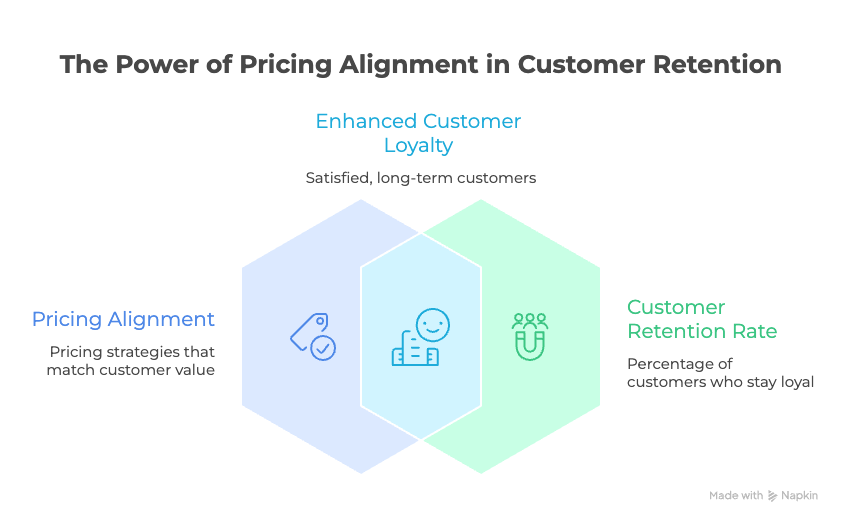
Pricing does more than set revenue. It shapes how buyers judge the product before they use it and whether they stay once they do. A model that feels arbitrary invites churn at renewal; one that tracks the value a customer receives makes expansion feel like a natural consequence rather than a negotiation.
“Pricing does more than determine revenue. It influences how customers evaluate the product and whether they continue using it over time.”
Sivan Kadosh, Fractional CPO
Pricing does more than determine revenue. It influences how customers evaluate the product and whether they continue using it over time.
If pricing feels disconnected from perceived value, customers may hesitate to adopt the product or may churn later. Conversely, when pricing scales naturally with usage or impact, customers often perceive pricing as fair and transparent.
One recurring observation from my work with SaaS teams is that pricing friction often appears earlier than expected. Users may hesitate to upgrade because the difference between pricing tiers feels unclear. Others may feel uncertain about usage based pricing if costs are difficult to predict.
Pricing clarity builds confidence. When customers understand how pricing works, they can make decisions more easily.
Pricing also influences product strategy. If revenue grows when customers increase usage, product teams often prioritize features that encourage deeper engagement. If revenue depends on seat expansion, collaboration features may become more important.
Pricing therefore affects not only monetization but also roadmap priorities.
What are the core pricing models?
Flat subscription charges a fixed recurring fee. Per-user scales with seats. Tiered packages features into levels. Usage-based charges for what is consumed. Hybrid combines a base fee with a usage component. Each suits a different relationship between what the customer pays and what they get.
“Most SaaS companies use one of several common pricing structures. Each model has advantages depending on product characteristics and customer behavior.”
Sivan Kadosh, Fractional CPO
Most SaaS companies use one of several common pricing structures. Each model has advantages depending on product characteristics and customer behavior.
Subscription pricing
Subscription pricing charges customers a fixed recurring fee, typically monthly or annually, for access to the product.
This model provides predictable revenue and is relatively simple for customers to understand. It works well for products that deliver consistent value over time, such as productivity tools or collaboration software.
From my experience, subscription pricing is often effective when the product’s value does not fluctuate significantly with usage. Customers appreciate predictability, particularly when budgeting for operational tools.
However, flat subscriptions may limit expansion opportunities if pricing does not scale with increased product usage.
Per user pricing
Per user pricing charges customers based on the number of users accessing the product.
This model aligns pricing with team growth. As organizations expand adoption internally, revenue increases proportionally.
Many B2B SaaS products adopt this structure because collaboration drives value. Examples include project management tools, communication platforms, and CRM systems.
One challenge with per user pricing is balancing accessibility with expansion incentives. Pricing too aggressively per seat may discourage wider adoption within organizations.
Tiered pricing
Tiered pricing offers multiple plans with different feature sets and pricing levels.
This model supports customer segmentation, allowing companies to serve different customer types with different needs.
For example, smaller teams may require core functionality, while larger organizations may require advanced integrations or security features.
Tiered pricing also supports expansion journeys, as customers upgrade when they require additional capabilities.
In practice, designing effective tiers requires understanding which features provide meaningful differentiation rather than artificially restricting functionality.
Usage based pricing
Usage based pricing charges customers according to product consumption, such as number of API calls, data processed, or transactions completed.
This model aligns cost with value delivered. Customers pay more when they derive more benefit from the product.
Usage based pricing has become increasingly common in infrastructure software, analytics platforms, and AI products.
From my experience, usage based pricing works particularly well when value scales with measurable activity. However, customers often require transparency and predictability to feel comfortable with variable costs.
Providing usage dashboards and cost estimators often improves trust.
Freemium pricing
Freemium pricing offers a free version of the product with limited functionality, allowing users to experience value before upgrading.
This model supports product led growth strategies by reducing adoption friction.
Freemium models can accelerate user acquisition, but conversion to paid plans depends on clearly communicating the additional value provided by premium features.
Freemium models often require strong onboarding experiences to guide users toward meaningful outcomes.
Hybrid pricing
Hybrid pricing combines elements of multiple pricing models.
For example, companies may charge a base subscription fee plus usage based components.
Hybrid pricing has become increasingly common as SaaS products become more sophisticated. AI platforms, communication platforms, and data tools often adopt hybrid approaches.
Hybrid models allow companies to balance revenue predictability with scalable expansion potential.
| Pricing model | Best suited for | Advantage | Limitation |
|---|---|---|---|
| Subscription | consistent value products | predictable revenue | limited expansion |
| Per user | collaborative tools | scales with adoption | may limit seat expansion |
| Tiered | segmented markets | supports upsell | requires careful packaging |
| Usage based | scalable infrastructure | aligns price with value | revenue variability |
| Freemium | product led growth | reduces friction | requires strong activation |
| Hybrid | complex platforms | flexible monetization | higher complexity |
Our tip: Use our free SaaS Pricing Calculator to compare different pricing models over a 12-month period and understand the impact of fees, taxes & churn on your Net Revenue.
How do the models compare?
The tradeoff runs between predictability, scalability and simplicity, and no model wins on all three. Subscription is predictable and simple but does not scale with value delivered. Usage-based scales beautifully and makes budgeting hard. Hybrid buys some of both at the cost of explaining it.
Each pricing structure involves tradeoffs between predictability, scalability, and simplicity.
| Model | Predictability | Scalability | Complexity |
|---|---|---|---|
| Subscription | high | medium | low |
| Usage based | medium | high | medium |
| Tiered | high | high | medium |
| Freemium | low | high | high |
| Hybrid | medium | very high | high |
Predictable pricing simplifies financial planning, while scalable pricing supports expansion revenue.
Balancing these factors often depends on company stage and product maturity.
How do you choose the right model?
Start from the value metric, meaning the unit that grows when the customer succeeds. If the bill rises as the customer gets more out of the product, pricing and value stay aligned. If it rises for some other reason, the model will eventually be argued with at every renewal.
Selecting a pricing model requires understanding how customers experience value from the product.
Align pricing with value metric
Value metrics represent the unit through which customers perceive value.
Examples include number of users, volume of data processed, number of transactions, or number of projects created.
When pricing reflects value metrics, customers often perceive pricing as fair.
For example, analytics platforms often price based on data volume because value increases as more data is analyzed.
Consider customer purchasing behavior
Self serve products often benefit from simple pricing structures that reduce decision friction.
Enterprise products may require more flexible pricing structures that accommodate complex purchasing processes.
Understanding how customers evaluate purchasing decisions helps determine appropriate pricing complexity.
Evaluate product complexity
Products with broad feature sets may benefit from tiered pricing structures.
Tiering helps segment customers based on needs rather than forcing all customers into a single package.
Careful packaging ensures customers feel they receive appropriate value at each pricing level.
Consider expansion potential
Pricing should support growth within customer accounts.
Expansion opportunities often represent a significant portion of SaaS revenue growth.
Designing pricing that supports account growth encourages long term relationships.
How does pricing evolve as you scale?
Early stage usually starts simple, because a single subscription tier is easy to sell and easy to explain while you are still learning. Growth stage adds tiers and segments as the customer base separates. Later, usage or hybrid components appear as consumption patterns become measurable and predictable.
Pricing strategies often evolve as companies learn more about customer behavior.
| Stage | Typical pricing model | Strategic objective |
|---|---|---|
| Early stage | simple subscription or freemium | reduce adoption friction |
| Series A | tiered pricing | segment customers |
| Series B | hybrid pricing | increase expansion revenue |
| Enterprise | custom pricing | optimize deal structure |
Early stage companies often prioritize simplicity to accelerate adoption.
As products mature, pricing becomes more sophisticated to reflect diverse customer needs.
From experience, pricing changes often occur after companies better understand which features customers value most.
What are the common pricing mistakes?
Underpricing the early product out of uncertainty about perceived value. Adding tiers faster than the segments that justify them. Choosing a metric customers cannot forecast. And leaving the model untouched for years while the product it prices has changed underneath it.
One common mistake is underpricing early versions of the product. Founders sometimes hesitate to charge appropriately due to uncertainty about perceived value.
Another frequent issue I have seen is selecting pricing metrics that do not reflect how customers experience value.
For example, pricing based on seats may not align with value if product usage depends primarily on data volume.
Overcomplicating pricing tiers can also create confusion. Customers often prefer clarity over excessive customization.
Failing to test pricing assumptions may limit growth potential.
Pricing should evolve as companies learn more about customer needs.
How does pricing shape product strategy?
It decides which features get investment. When the bill scales with usage, teams build for depth and consumption. When it scales with seats, they build for collaboration and rollout. The pricing model quietly writes part of the roadmap, whether or not anyone intends it to.
Pricing affects more than revenue. It influences which features receive investment.
If pricing scales with usage, product teams often prioritize features that increase engagement frequency. If pricing depends on collaboration, product teams may prioritize sharing features and team workflows.
From experience, pricing decisions often clarify which customer segment the company wants to serve.
Premium pricing often signals focus on higher value use cases, while freemium pricing often supports broader adoption. Keep in mind: pricing and product strategy are closely interconnected.
When should a fractional CPO get involved?
When the decision needs balancing rather than owning. Product understands feature value, marketing understands positioning, sales understands objection, and finance understands margin. Pricing sits where those four meet, which is exactly the seam a product leader is there to hold.
Pricing decisions often require balancing multiple perspectives. Product teams understand feature value. Marketing teams understand positioning. Sales teams understand customer objections.
Aligning these perspectives requires structured decision making.
A fractional Chief Product Officer helps companies define value metrics, evaluate pricing hypotheses, and align pricing structure with long term product strategy.
In many cases, pricing improvements do not require major changes but rather adjustments to packaging, messaging, or feature differentiation. From experience, pricing discussions often reveal deeper questions about positioning and differentiation.
Addressing these questions improves clarity across the organization.
Design a SaaS pricing model that supports long term growth
Pricing shapes how customers perceive your product. Clear pricing communicates confidence. Aligned pricing supports sustainable growth.
When pricing reflects real customer value, expansion becomes natural rather than forced. Strong pricing models support both customer success and business sustainability.
A fractional product leader helps companies connect pricing decisions with product strategy, ensuring pricing supports long term growth rather than short term optimization.
Pricing model no longer matching the product?
Get a senior, ex-CPO read on your biggest product bottleneck in 30 focused minutes. No pitch, no obligation.
Book a strategy callKey takeaways
- SaaS pricing models influence acquisition, retention, and expansion revenue.
- Pricing should align with how customers experience product value.
- Different pricing models support different growth strategies.
- Pricing evolves as companies scale and learn more about customers.
- Strategic pricing decisions improve both product positioning and financial performance.
I have hired product people, and I have been one. Whichever title you pick, someone has to carry the decision.
See what a monetization PM owns →FAQs
What are the most common SaaS pricing models?
The most common SaaS pricing models include subscription pricing, per user pricing, tiered pricing, usage based pricing, freemium, and hybrid pricing.
What is the best pricing model for SaaS?
The best pricing model depends on how customers experience value from the product. Pricing should align with usage patterns and support expansion opportunities.
What is hybrid pricing in SaaS?
Hybrid pricing combines multiple pricing components, such as subscription fees and usage based charges.
How often should SaaS pricing change?
Pricing should evolve as companies better understand customer behavior and product value. Frequent small adjustments are often more effective than large infrequent changes.
What is value based pricing in SaaS?
Value based pricing aligns price with the perceived benefit customers receive from the product rather than production costs.
What clients say
Read all 18 references“As a product manager, I can say that Sivan is very professional – always looking deeply on the discussed feature to understand end to end its effect on the whole product, and as well the eager to understand what would be the added value to the strategy of the company. Nothing was added without a clear scope of development, a clear understanding of the business owner and a clear way to measure the success or failure of this feature.”
“Leading by example, empowering, mentoring, and growing his product teams, he created great product culture and set us Product Managers up for success. His vision and strategic direction enabled us to create successful products that brought millions of dollars of revenue to the company and its clients.”
“As part of his role as VP Product, he identified creative ideas, developed sharp strategies and built the road map while focusing on customer experience and business needs.”