
What a SaaS Fractional CPO Does for Series A and B Startups
August 12, 2025 • 11 min read
Last Updated on September 5, 2026
You raised a Series A or B round for your SaaS company. The product that got you here was built on founder intuition, fast iteration, and saying yes to everything. Now the board wants a product roadmap. Your engineers are asking for clearer priorities. Customers are requesting features that contradict each other. And you are spending 30-40% of your time as CEO playing de facto CPO – time you should be spending on fundraising, sales, and hiring.
This is the inflection point where most SaaS companies between $2M and $15M ARR need a dedicated product leader. But a full-time CPO costs $250,000+ all-in, plus equity – often more than Series A companies can justify.
A fractional CPO gives you executive-level product leadership at 25 hours a month on the standard engagement ($4,950 a month), scaling up for larger scopes. This guide covers exactly what a fractional CPO does for Series A and B SaaS startups, the 90-day engagement timeline, the KPIs they should move, and how to decide whether fractional or full-time is right for your stage. If you are exploring broader product management consulting services options, this page will help you understand where a fractional CPO fits.
7 Signs Your Series A/B SaaS Needs a Fractional CPO
- The CEO is the de facto product leader. You spend more time in Jira and product reviews than on fundraising, sales, or hiring.
- The roadmap is a feature list, not a strategy. Nobody can explain how the roadmap connects to revenue growth.
- Churn is climbing but nobody owns it. No structured process for understanding why customers leave.
- You are about to make your first PM hire. You need someone senior to define the role, set up the product function, and mentor your first fractional product manager or full-time PM.
- Pricing has not changed since launch. Still on the original pricing model despite your product, market, and customer base all changing. A fractional CPO can introduce a hybrid pricing model to unlock expansion revenue.
- Engineering is shipping fast but metrics are not moving. Sprint velocity is high but activation, retention, and expansion revenue are flat.
- Your investors are asking about product leadership. Board members are questioning product direction and want to see a credible product leader at the table.
If three or more of these describe your situation, a fractional CPO is likely the right next step. If all seven apply, it is urgent.
What a SaaS Fractional CPO Does: Core Outcomes
North Star and Product Strategy
- Define the growth thesis, guardrails, and measurable outcomes.
- Translate company OKRs into product OKRs tied to ARR, NRR, and payback.
Evidence-Based Roadmap
- Prioritize by impact and confidence, not opinions.
- Replace feature lists with problem statements and measurable value.
Customer and Market Insight
- Establish a continuous discovery cadence with ICPs and buying committee roles.
- Validate jobs-to-be-done, willingness to pay, and value metrics.
Pricing and Packaging for Scale
- Align packaging to value drivers and adoption paths.
- Test monetization levers that lift ARPA and reduce sales friction.
Delivery and Quality at Speed
- Move to outcome-oriented planning and release trains.
- Improve cycle time, DOR/DOD clarity, and cross-team handoffs.
Activation, Adoption, Retention
- Build product-led funnels with clear activation events.
- Instrument the product to track aha, habit, and expansion moments.
Org Design and Hiring
- Shape the product org for your current stage.
- Coach PMs, establish career ladders, and hire where it matters.
Series A vs. Series B: What Changes
Series A ($2M-$5M ARR, 10-30 Employees) – Proving Repeatability
At Series A, the fractional CPO’s job is to turn founder-led product intuition into a repeatable system. The company has product-market fit signals but has not yet proven it can scale. Key focus areas:
- Tightening the ICP. Most Series A SaaS companies are selling to too many segments. A fractional CPO applies segment exclusion rules so engineering effort concentrates on the customers who actually retain and expand.
- Building the first real roadmap tied to Series B metrics. Investors funding your Series B want to see NRR above 110%, strong activation rates, and improving logo retention. The roadmap must map directly to these numbers.
- Making the first PM hire. This is one of the highest-leverage decisions at Series A. A fractional CPO defines the role, writes the job description, runs the hiring process, and mentors the new PM through the first 90 days. Some companies start with a fractional product manager before committing to a full-time hire.
- Setting up pricing for growth. The launch pricing was guesswork. A fractional CPO introduces value-based pricing, tests packaging tiers, and builds a hybrid pricing model that supports both self-serve and sales-led motions.
- Lightweight processes that produce signal, not ceremony.
Series B ($5M-$15M ARR, 30-100 Employees) – Scaling Systems
At Series B, the product function needs to scale from founder-plus-one to a real team. The fractional CPO shifts from building the foundation to building the machine. Key focus areas:
- Multi-segment strategy. You are now selling to multiple personas, company sizes, or verticals. The fractional CPO designs packaging and positioning that serves each segment without fragmenting the product.
- Platform thinking. Reliability, security, API strategy, and integrations become table stakes. The fractional CPO ensures platform investments are planned alongside feature work.
- Pricing optimization. Moving beyond good-better-best into usage-based components, add-ons, and enterprise tiers. Pricing experiments that lift ARPA without harming conversion.
- Product team scaling from 1-2 PMs to 5-8. Defining team topology, hiring senior PMs, establishing product ops, and creating the operating cadence that keeps a growing team aligned.
- Board-ready metrics. Deeper analytics including cohort retention, PQL scoring, expansion motion tracking, and a metrics dashboard that tells a clear story to investors and board members.
A 90-Day Playbook for a SaaS Fractional CPO
Days 1-15: Diagnose and Align
- Executive interviews, pipeline review, churn interviews.
- Instrumentation audit. Define North Star metric and KPIs.
- Draft product strategy one-pager. Agree on stop/start/continue.
Days 16-45: Prove with Fast Wins
- Ship 2-3 measurable wins tied to activation or conversion.
- Stand up discovery cadence and experiment backlog.
- Introduce outcome-based roadmap and decision rubric.
Days 46-90: Systematize
- Pricing or packaging test in market.
- Quarterly planning linking roadmap bets to KPIs.
- Hiring plan and operating cadence for product, design, and engineering.
Typical Deliverables: strategy one-pager, outcome roadmap, customer insight repository, monetization test plan, instrumentation plan, and hiring plan.
Cost, Pricing, and ROI
Fractional CPO Engagement Types and Pricing
| Engagement Type | Monthly Cost | Time Commitment | Best For |
|---|---|---|---|
| Advisory / light-touch | Near $2,500 | 4-8 hrs/week | Companies with a strong PM who needs executive mentorship and strategic guidance |
| Standard fractional | $5,000-$15,000 | 1-2 days/week | Series A/B SaaS companies needing hands-on strategic product leadership |
| Deep fractional / interim | $15,000-$25,000 | 3-4 days/week | Companies in crisis, major pivots, or leadership transitions |
Fractional CPO vs. Full-Time CPO: Cost Comparison
A full-time CPO at a Series A or B SaaS company costs $260K to $400K in base and cash, plus equity and benefits – typically $300K-$450K in total annual compensation. Add 4-6 months of recruiting time and the risk of a bad hire.
A standard fractional CPO engagement at $10K per month costs $120K per year – roughly one-third of the full-time cost, with no equity dilution, no recruiting delay, and the flexibility to scale up or down. For a detailed breakdown of when each model makes sense, see fractional CPO vs. full-time CPO.
Not sure whether you need a fractional CPO or an interim CPO? The key difference is duration and depth of involvement. Read more about fractional CPO vs. interim CPO to decide which fits your situation.
ROI: What the Numbers Look Like
A 5 percentage point improvement in net revenue retention on $5M ARR adds $250K in annual revenue. At a fractional CPO cost of $120K per year, that is a 2x+ return – and NRR improvement is just one lever. Factor in activation rate gains, pricing optimization, and reduced churn, and the ROI compounds further.
- Expected Returns: faster time-to-value, higher win rates, higher ARPA, better retention, fewer dead-end features.
- Typical Goal: ROI within a quarter via pricing changes, activation gains, or waste reduction.
Pricing and Packaging: What a Fractional CPO Changes
- Shift from seat-based to value-based pricing where applicable.
- Unbundle to match buying committee needs.
- Introduce good-better-best tiers with upgrade paths.
- Align price presentation with sales motion to shorten deal cycles.
- Add usage or add-on monetization without losing simplicity.
Result: higher ARPA, cleaner expansion, and fewer discount requests.
KPIs a SaaS Fractional CPO Should Move
- Acquisition: website-to-signup conversion, demo-to-opportunity rate. Benchmark: 2-5% for PLG, 10-20% demo-to-opp for sales-led.
- Activation: % reaching activation event in 7 days. Benchmark: 20-40% for B2B SaaS.
- Adoption: WAU/MAU ratio, feature adoption for core workflows. Benchmark: 25%+ WAU/MAU for healthy B2B products.
- Monetization: ARPA, win rate, sales cycle length, payback. Benchmark: payback under 18 months, win rate 20-30%.
- Retention: logo retention, gross/net revenue retention by cohort. Benchmark: 90%+ logo retention, 100%+ NRR for Series B.
- Velocity: lead time for changes, release frequency, escaped defects.
Tie each roadmap bet to a KPI shift and confidence level; review monthly.
How a SaaS Fractional CPO Works With Your Team
- Engagement Model: 25 hours a month on the standard engagement ($4,950 a month), scaling up for larger scopes, with clear outcomes per sprint cycle.
- Operating Rhythm: weekly leadership sync, biweekly product reviews, monthly KPI review, quarterly planning.
- Collaboration: embedded with PMs, design, engineering, sales, and CS – not an outside advisor dropping in for a call.
- Enablement: templates for PRDs, discovery notes, bet scorecards, post-launch reviews.
Mistakes to Avoid When Hiring a Fractional CPO
- Treating the role as a glorified senior PM.
- Rebuilding all processes before shipping quick wins.
- Spreading bets across too many segments.
- Shipping features without clear success metrics.
- Hiring a fractional CPO from a large enterprise background who has never operated at startup speed.
Why SaaS Fractional CPO
Not all fractional CPOs are the same. Most come from large enterprise backgrounds where they managed existing products with large teams and established processes. That experience does not translate to the chaos, speed, and resource constraints of Series A and B SaaS.
Sivan Kadosh brings 18+ years of B2B SaaS product leadership specifically in high-growth environments:
- Launching multiple SaaS platforms generating hundreds of millions in revenue
- Leading product organizations of up to 300 people across multiple product lines
- Running AI-native product workflows that reduce planning cycle time by 60%
- Hands-on execution – PRDs, user stories, sprint planning, stakeholder alignment – not just strategy decks
The difference: you get a fractional CPO who has built and scaled SaaS products at the exact stage you are in now, not someone adapting enterprise playbooks to your startup.
Book a Product Strategy Session to discuss your product challenges and see if a fractional CPO engagement is the right fit.
Real Deliverables You Can Expect
- Product strategy one-pager.
- Outcome-based roadmap with bet sizing and KPIs.
- Discovery and customer council calendar.
- Pricing and packaging test matrix.
- Analytics and instrumentation map.
- Hiring plan and scorecards for key roles.
FAQ
How much does a fractional CPO cost for a Series A SaaS startup?
A fractional CPO for a Series A SaaS startup typically costs $4,950 a month for 25 hours on the standard engagement, scaling up for larger scopes. This is under a quarter of the cost of a full-time CPO, who runs $250,000+ all-in, plus equity. Most engagements start with a 90-day program on the standard engagement to prove impact before extending.
When should a SaaS startup hire a fractional CPO?
The clearest signal is when the CEO is spending 30%+ of their time on product decisions. Specifically, Series A companies at $2M-$5M ARR should consider a fractional CPO when they are preparing for Series B fundraising, making their first PM hire, or seeing churn climb without a clear owner. Series B companies at $5M-$15M ARR typically need one when scaling from 1-2 PMs to a full product team, optimizing pricing, or building board-ready product metrics.
What is the difference between a fractional CPO and a product consultant?
A product consultant typically delivers a one-time assessment, strategy document, or recommendation. They advise and leave. A fractional CPO for B2B SaaS is embedded in your team on an ongoing basis – attending standups, making prioritization calls, coaching PMs, and being accountable for product outcomes over quarters, not weeks.
Can a fractional CPO help prepare for Series B fundraising?
Yes. Series B investors evaluate product maturity heavily. A fractional CPO directly improves the metrics investors care about: net revenue retention above 110%, strong activation and adoption rates, a roadmap tied to measurable outcomes, and evidence of product-market fit expanding into adjacent segments. They also help build the product narrative for the fundraising deck and can participate in investor Q&A sessions on product strategy.
What is a SaaS Fractional CPO?
An executive product leader who partners part-time with your SaaS company to set strategy, design the roadmap, improve monetization, and drive cross-functional execution. Unlike a consultant, they are embedded in your team and accountable for outcomes.
How long is a typical fractional CPO engagement?
Usually starts with a 90-day program to prove impact, then extends for 2-3 more quarters as the fractional CPO systematizes the product function and coaches internal leaders to take over.
Will a fractional CPO slow down engineering?
No. The opposite. You will have a clearer backlog, tighter specs, and faster decisions. Engineering teams spend less time building the wrong things and more time shipping work that moves metrics.
Can a fractional CPO help with fundraising?
Yes. They sharpen the product narrative, metrics, and roadmap story for your board and investors.
Book a Product Strategy Session to discuss whether a fractional CPO is the right fit for your SaaS company.
Thinking about embedded product leadership?
If you are scaling through Series A or B, see our Fractional CPO for Series A/B SaaS.
Explore Fractional CPO Services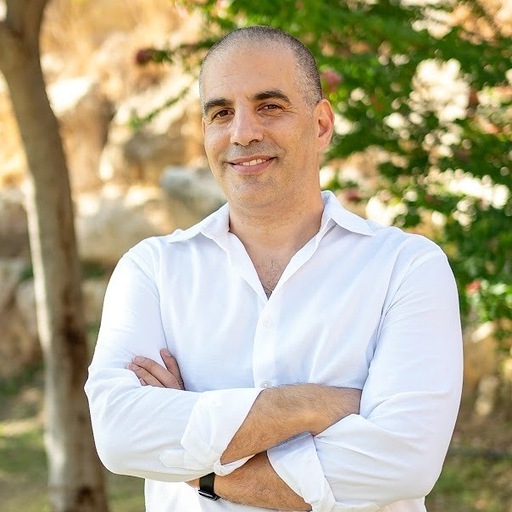
Sivan Kadosh is a senior SaaS product executive with 18+ years leading product (since 2007), now working as a full-time Fractional Chief Product Officer for B2B SaaS companies. He has held CPO and VP Product roles at B2B SaaS and technology companies including Touch Stay, LIVV Technologies, Tick Tech, and Naxex, turning product strategy into ARR, activation, and retention. Based in Lisbon, he helps Series A and B SaaS founders fix the product bottleneck without the cost of a full-time executive. B.Sc. Industrial Engineering (Ruppin).