
SaaS modeling is the practice of building a financial and operational model that predicts how a subscription business grows. It links product behavior to revenue, accounting for acquisition, churn, expansion and lifetime value, so leadership can test a decision before making it rather than discover its cost a year later.
I am the one who decides what gets cut. If everything on your list is a priority, the strategy has not been made yet.
See how a product strategy engagement runs →The SaaS Unit Economics Calculator covers the retention and payback slice of that model. What the result is worth comes out of the SaaS Valuation Calculator.
I always tell my kids that if success is a building, the bricks that construct it are the failures an entrepreneur endures along the way. I’ve failed my fair share of times, and when success finally came, it was rooted in a deep, precise understanding of the business model the company needed to execute. The data backs up this painful reality: CB Insights finds that a flawed business model and simply running out of cash are among the most commonly cited reasons startups fail, and the second is a direct consequence of lacking an accurate forecasting model.
The metrics you embed into your model act as the compass dictating your trajectory for the months and years ahead. To build a sustainable business, you must define the Key Performance Indicators (KPIs) that serve as the foundation of any successful SaaS company. The impact of these metrics is staggering; for instance, research by Bain & Company, published in Harvard Business Review, finds that a 5% increase in customer retention (reducing churn) can raise profitability by 25% to 95%. Without a firm grasp on these numbers, you are simply marching, just as I did more than once in my early days, on a road to nowhere.
In this article, we will deconstruct the concept of ‘SaaS Modeling’ from abstract theory into mandatory practice. We’ll explore which critical metrics you must integrate into your model, how they directly dictate your company’s growth and survival, and how you can transform dry data into a strategic tool that saves you from costly mistakes and steers you toward success.
What does SaaS modeling actually mean?
A model of how the subscription engine behaves, not a spreadsheet of last quarter. It takes acquisition, churn, expansion and cost, connects them to product behavior, and projects forward. The output is not a number you defend to investors, it is a way to test a decision cheaply.
“Unlike traditional business forecasts, SaaS models must account for recurring revenue dynamics, including customer acquisition, churn, expansion revenue, and long term customer value.”
Sivan Kadosh, Fractional CPO
SaaS modeling is the process of building a financial and operational model that predicts how a SaaS company will grow over time. Unlike traditional business forecasts, SaaS models must account for recurring revenue dynamics, including customer acquisition, churn, expansion revenue, and long term customer value.
At its core, SaaS modeling simulates how changes in key variables affect the growth trajectory of the business. These variables typically include customer acquisition rates, retention performance, pricing models, and product adoption patterns.
Many founders assume SaaS modeling is simply a finance exercise. In reality, it sits at the intersection of product strategy, growth, and economics. Every product decision influences the assumptions inside the model. If onboarding improves activation rates, revenue projections change. If churn increases, long term growth slows dramatically.
A well built SaaS model therefore acts as a system that connects product behavior with financial outcomes.
Why does SaaS modeling matter?
Because small changes compound in ways intuition gets wrong. A point of monthly churn or a shift in acquisition cost looks minor in isolation and reshapes the revenue curve over three years. Without a model, leadership makes those trades without seeing what they cost.
SaaS companies operate in an environment where small changes compound over time. A slight increase in churn or customer acquisition cost can dramatically alter long term revenue outcomes. Without a structured model, leadership teams are essentially making strategic decisions without understanding their downstream impact.
SaaS modeling helps leadership answer questions such as:
- How fast can the company realistically grow?
- How sensitive is revenue growth to churn?
- How much can the company spend on acquiring customers?
- What happens if pricing increases or decreases?
- How will expansion revenue influence long term growth?
These questions are particularly important when companies enter scaling phases or prepare for fundraising. Investors expect founders to understand the mechanics of their growth engine, not just the current revenue numbers.
More importantly, SaaS modeling allows leadership teams to test scenarios before committing resources. Instead of relying on optimistic projections, teams can simulate realistic outcomes based on product behavior and historical data.
Our tip: explore our product management consulting services, which include hands-on PM coaching.
What are the core components of a SaaS model?
Acquisition, retention, expansion and cost, each expressed as a driver rather than a total. Drivers describe how customers enter the system, how long they stay and how much they spend while there. Totals tell you what happened; drivers let you ask what happens if.
Every SaaS model is built around a small number of interconnected drivers. These drivers simulate how customers enter the system, how long they stay, and how much revenue they generate.
Understanding these components is essential for building a realistic model.
Customer acquisition modeling
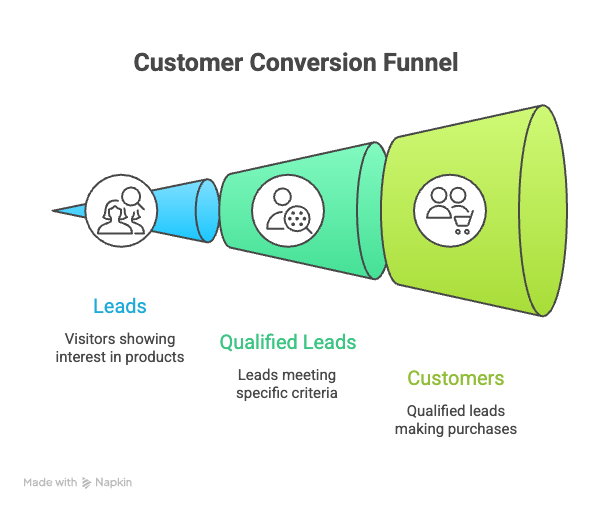
Customer acquisition modeling estimates how new customers enter the system over time. This typically begins with a funnel that converts potential customers into paying users.
Inputs commonly include:
- Website traffic or lead generation
- Marketing conversion rates
- Sales conversion rates
- Sales cycle duration
- Monthly customer acquisition capacity
These inputs determine how many new customers enter the model each month. Even small changes in conversion rates can significantly affect projected growth.
For example, improving a trial conversion rate from 10 percent to 15 percent may increase monthly customer acquisition by 50 percent without increasing marketing spend.
Revenue modeling
Revenue modeling determines how much revenue each customer contributes to the business.
SaaS companies typically use one of three pricing structures:
- Subscription pricing, where customers pay a fixed monthly or annual fee
- Usage based pricing, where revenue depends on consumption
- Hybrid pricing models that combine both approaches
Revenue modeling requires tracking several key metrics including monthly recurring revenue and average revenue per account. These metrics allow the model to project how new customers translate into revenue growth.
A robust revenue model also separates different types of revenue changes, including new customer revenue, expansion revenue, and churned revenue.
Retention and churn modeling
Retention is the most important variable in most SaaS models. While customer acquisition determines how quickly the system grows, retention determines whether that growth compounds.
Churn modeling estimates how many customers leave the product each month or year. Even modest churn rates can dramatically affect revenue over time.
For example, a SaaS company losing five percent of its customers every month may lose more than half of its customer base within a year if acquisition slows.
Effective SaaS models therefore track both customer churn and revenue churn. Customer churn measures how many users leave, while revenue churn captures how much revenue disappears when customers downgrade or cancel.
Our tip: Learn more about how to reduce churn in SaaS
Expansion revenue modeling
Many SaaS companies grow not only by acquiring customers but also by increasing the revenue generated from existing users. Expansion revenue includes seat upgrades, usage growth, cross selling, and price increases.
This component of SaaS modeling often determines whether a company can achieve strong net revenue retention. Companies with high expansion revenue may grow even if acquisition slows.
Modeling expansion revenue requires understanding how customer behavior evolves after adoption. For example, enterprise SaaS products often expand as additional teams adopt the product.
Which metrics must a SaaS model include?
Monthly recurring revenue, average revenue per account, customer and revenue churn separately, acquisition cost and lifetime value. Splitting customer churn from revenue churn matters most, because a company can hold its logo count steady while the revenue underneath it quietly shrinks through downgrades.
“For example, a SaaS company losing five percent of its customers every month may lose more than half of its customer base within a year if acquisition slows.”
Sivan Kadosh, Fractional CPO
Every SaaS model depends on a set of metrics that describe how efficiently the business grows.
| Metric | What it measures | Why it matters |
|---|---|---|
| MRR | Recurring monthly revenue | Tracks revenue growth |
| CAC | Customer acquisition cost | Measures acquisition efficiency |
| LTV | Customer lifetime value | Estimates long term revenue per customer |
| CAC payback | Time to recover acquisition cost | Indicates sustainable growth |
| Net revenue retention | Revenue retained including expansion | Indicates product strength |
| Churn rate | Customer loss over time | Determines growth stability |
Understanding how these metrics interact is critical. For example, high acquisition costs may still be acceptable if retention and expansion generate strong lifetime value.
How do you build a SaaS model?
Start from drivers you can actually measure, not from a revenue target worked backwards. Lay in acquisition, then retention, then expansion, and only then let the model produce a number. A model built to reach a figure someone already chose will reach it, and teach you nothing.
Building a SaaS model involves translating business assumptions into measurable drivers. While models can become complex, the underlying structure typically follows a predictable sequence.
Step 1: define acquisition assumptions
Start by estimating how many new customers the company can realistically acquire each month.
This requires estimating marketing performance, lead generation volume, and conversion rates. Companies should use historical data whenever possible instead of optimistic projections.
Step 2: model customer growth
Next, convert acquisition inputs into customer growth projections. This stage calculates how the total customer base evolves each month after accounting for new customers and churn.
Step 3: model churn and retention
Retention assumptions should be based on cohort analysis when possible. Rather than using a single churn number, companies should analyze how different customer groups behave over time.
This produces a more realistic understanding of retention dynamics.
Step 4: project revenue expansion
Expansion assumptions capture how revenue from existing customers grows. These assumptions often depend on product adoption patterns, seat expansion, or usage increases.
Companies with strong product adoption frequently see expansion rates increase as customers integrate the product deeper into their workflows.
Step 5: simulate growth scenarios
The final step is scenario modeling. Instead of relying on a single forecast, leadership teams should simulate multiple scenarios that reflect different growth conditions.
For example, teams may simulate what happens if churn rises due to competitive pressure or if pricing increases improve revenue per account.
What are the common SaaS modeling mistakes?
A single blended churn rate hides the difference between a canceled logo and a downgrade. Expansion revenue gets left out entirely. And the output gets treated as a forecast rather than a range, which is how a model built once for a fundraise ends up never being updated.
Despite their importance, many SaaS models fail to accurately predict growth. The most common reason is that the model does not reflect how the product actually behaves in the market.
One frequent mistake is treating churn as a single constant number. In reality, churn varies significantly across customer segments and cohorts. Enterprise customers often behave very differently from small business customers.
Another mistake is ignoring expansion revenue. Many models assume customers generate the same revenue every month, even though successful SaaS companies often grow revenue from existing customers over time.
Some companies also assume acquisition growth will continue indefinitely. In practice, marketing channels saturate and sales capacity limits growth.
Finally, many SaaS models fail to connect product behavior with financial outcomes. Activation rates, feature adoption, and onboarding quality often determine retention, yet these variables rarely appear in financial models.
What does a SaaS model look like in practice?
Take a trial conversion rate moving from ten to fifteen percent. Acquisition rises by half without a cent more marketing spend, and every downstream number moves with it. That is the point of the exercise, seeing which lever actually moves the curve before you pull it.
Consider a simplified example of a SaaS company charging fifty dollars per user per month.
Assume the company acquires one hundred new customers every month, experiences five percent monthly churn, and achieves ten percent annual expansion revenue.
After twenty four months, the model may project recurring revenue exceeding several hundred thousand dollars per month, depending on retention and expansion dynamics.
However, if churn increases from five percent to seven percent, long term revenue may decline significantly. This example illustrates why modeling different scenarios is essential.
How product strategy influences SaaS modeling
The model is only as good as the product assumptions underneath it. Retention is a product outcome before it is a financial one, and so is expansion. When strategy changes what the product does for whom, the drivers change, and a model nobody revisits starts lying quietly.
Financial models often assume the product remains static. In reality, product strategy directly shapes the variables that determine growth.
Pricing changes affect revenue per customer. Improvements in onboarding can dramatically increase activation rates. New features may increase retention or expansion revenue.
This means SaaS modeling should not exist in isolation from product leadership. Product strategy decisions constantly reshape the assumptions inside the model.
For this reason, high growth SaaS companies often integrate modeling into their product operating model. Product teams, growth teams, and leadership align around the same revenue drivers.
When SaaS companies should bring in a fractional CPO
When the numbers in the model and the work on the roadmap have stopped describing the same company. Someone has to own the connection between what gets built and what the model assumes, and that is a product leadership job rather than a finance one.
Many SaaS companies struggle to build realistic models because the variables driving growth are deeply connected to product strategy. Financial teams may build spreadsheets, but without understanding product behavior the projections often become unrealistic.
This is one of the situations where a fractional CPO can create significant impact.
A fractional CPO for growth-stage SaaS works with founders and leadership teams to connect product decisions with growth mechanics. Instead of focusing purely on feature development, the role focuses on identifying the drivers that influence retention, expansion, and long term revenue.
For example, a fractional CPO may help teams build realistic SaaS models that incorporate product adoption data, customer segmentation, and retention dynamics. They may also align the product roadmap with the metrics that drive sustainable growth.
When product strategy and financial modeling operate together, leadership teams gain a clearer view of how product improvements translate into revenue outcomes.
Explore our fractional CPO services and start building the perfect SaaS product.
Model says one thing, roadmap says another?
Get a senior, ex-CPO read on your biggest product bottleneck in 30 focused minutes. No pitch, no obligation.
Book a strategy callFinal thoughts
A model is a thinking tool that happens to produce numbers. Its value is not the projection at the end but the argument it forces at the start, about which drivers matter and what you actually believe about them. Build it to be argued with.
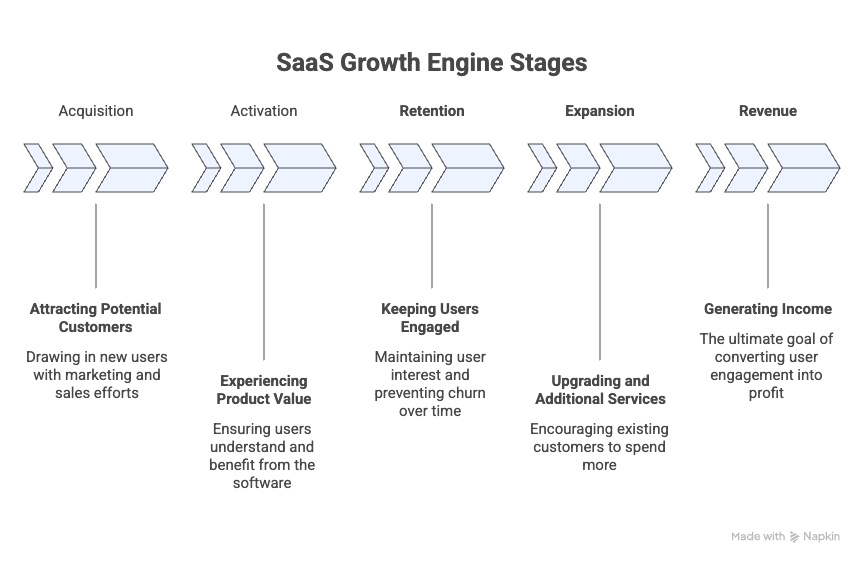
SaaS modeling is not just about predicting revenue. It is about understanding how the entire growth system of a SaaS company operates.
Customer acquisition introduces users into the system. Product experience determines whether they stay. Expansion revenue increases their value over time. When these elements work together, growth compounds.
Companies that master SaaS modeling gain a powerful advantage. Instead of reacting to unpredictable revenue patterns, leadership teams can anticipate growth dynamics and adjust strategy accordingly.
In high growth SaaS environments, the difference between optimistic projections and realistic models often determines whether companies scale successfully or stall.
I am the one who decides what gets cut. Frameworks rank the list. Someone still has to say no out loud.
See how a product strategy engagement runs →FAQs
What is SaaS modeling?
SaaS modeling is the process of forecasting how a SaaS business will grow by simulating revenue, customer acquisition, churn, pricing, and expansion over time. Instead of projecting revenue as a single number, SaaS modeling builds a system that reflects how customers enter the product, how long they stay, and how their value evolves. This approach helps founders and product leaders understand the long term impact of product decisions, marketing investments, and pricing changes on recurring revenue growth.
How do you build a SaaS financial model?
A SaaS financial model is typically built by defining a set of core growth drivers and projecting them over time. The process starts by estimating customer acquisition through marketing and sales channels, then modeling how those customers convert into recurring revenue. The model must also include churn assumptions, expansion revenue from existing customers, and operating costs. Once these drivers are established, companies can simulate different scenarios to understand how changes in retention, pricing, or acquisition efficiency affect long term growth.
What metrics are used in SaaS modeling?
SaaS models rely on several key metrics that describe how efficiently the business grows. These usually include monthly recurring revenue, customer acquisition cost, customer lifetime value, churn rate, and net revenue retention. Together, these metrics show how quickly a company can acquire customers, how long those customers stay, and how much revenue they generate over time. Accurate modeling depends on understanding how these metrics interact rather than analyzing them individually.
Why is churn important in SaaS modeling?
Churn plays a central role in SaaS modeling because it determines whether revenue compounds or declines over time. Even small changes in churn can dramatically affect long term growth. If customers leave the product faster than new customers are acquired, revenue growth eventually slows or reverses. This is why successful SaaS companies invest heavily in retention, onboarding improvements, and product adoption, since improving retention often has a larger impact on revenue than increasing acquisition.
What is net revenue retention in SaaS?
Net revenue retention measures how much revenue a company keeps from existing customers after accounting for churn, downgrades, and expansion revenue. A net revenue retention rate above one hundred percent means the company generates more revenue from existing customers each year even if no new customers are acquired. This metric is widely used by investors because it reflects the strength of the product and the long term growth potential of the business.
What is the difference between SaaS modeling and SaaS forecasting?
SaaS forecasting typically focuses on predicting revenue based on current trends, while SaaS modeling builds a structured system that explains why growth occurs. Forecasts often rely on historical data and linear projections, whereas models simulate how different variables interact. For example, a SaaS model can show how changes in pricing, churn, or expansion revenue influence future growth scenarios, allowing leadership teams to test strategic decisions before implementing them.
Who is responsible for SaaS modeling in a company?
Responsibility for SaaS modeling usually sits across several leadership roles. Finance teams often build the financial structure of the model, while product leaders contribute insights about customer behavior, retention drivers, and expansion opportunities. In many growing SaaS companies, a fractional CPO or senior product leader helps connect product strategy with the financial assumptions inside the model. This ensures that revenue projections reflect how the product actually performs in the market rather than relying on purely financial estimates.
What clients say
Read all 18 references“As a product manager, I can say that Sivan is very professional – always looking deeply on the discussed feature to understand end to end its effect on the whole product, and as well the eager to understand what would be the added value to the strategy of the company. Nothing was added without a clear scope of development, a clear understanding of the business owner and a clear way to measure the success or failure of this feature.”
“Leading by example, empowering, mentoring, and growing his product teams, he created great product culture and set us Product Managers up for success. His vision and strategic direction enabled us to create successful products that brought millions of dollars of revenue to the company and its clients.”
“As part of his role as VP Product, he identified creative ideas, developed sharp strategies and built the road map while focusing on customer experience and business needs.”
